Why Your Pot Material Changes How Often You Water - More Than the Plant Does
Quick Answer: Terracotta is porous and loses water through its walls, so it dries out roughly twice as fast as plastic or glazed ceramic. The same plant in the same spot can need water every four days in terracotta and every ten in a glazed pot. This is why a fixed watering schedule fails: the schedule belongs to the pot, not to the plant. Match the pot to your habits - terracotta if you tend to overwater, plastic or glazed if you forget.
Pot material is one of the largest and least discussed variables in houseplant care.
Here is how each one behaves.
Why does terracotta dry out so much faster?
Because it is a porous material and moisture moves through it continuously.
Unglazed terracotta is full of microscopic pores. Water wicks from the soil into the clay, travels to the outer surface, and evaporates. The pot is functioning as a slow, constant drain in every direction, not just downward.
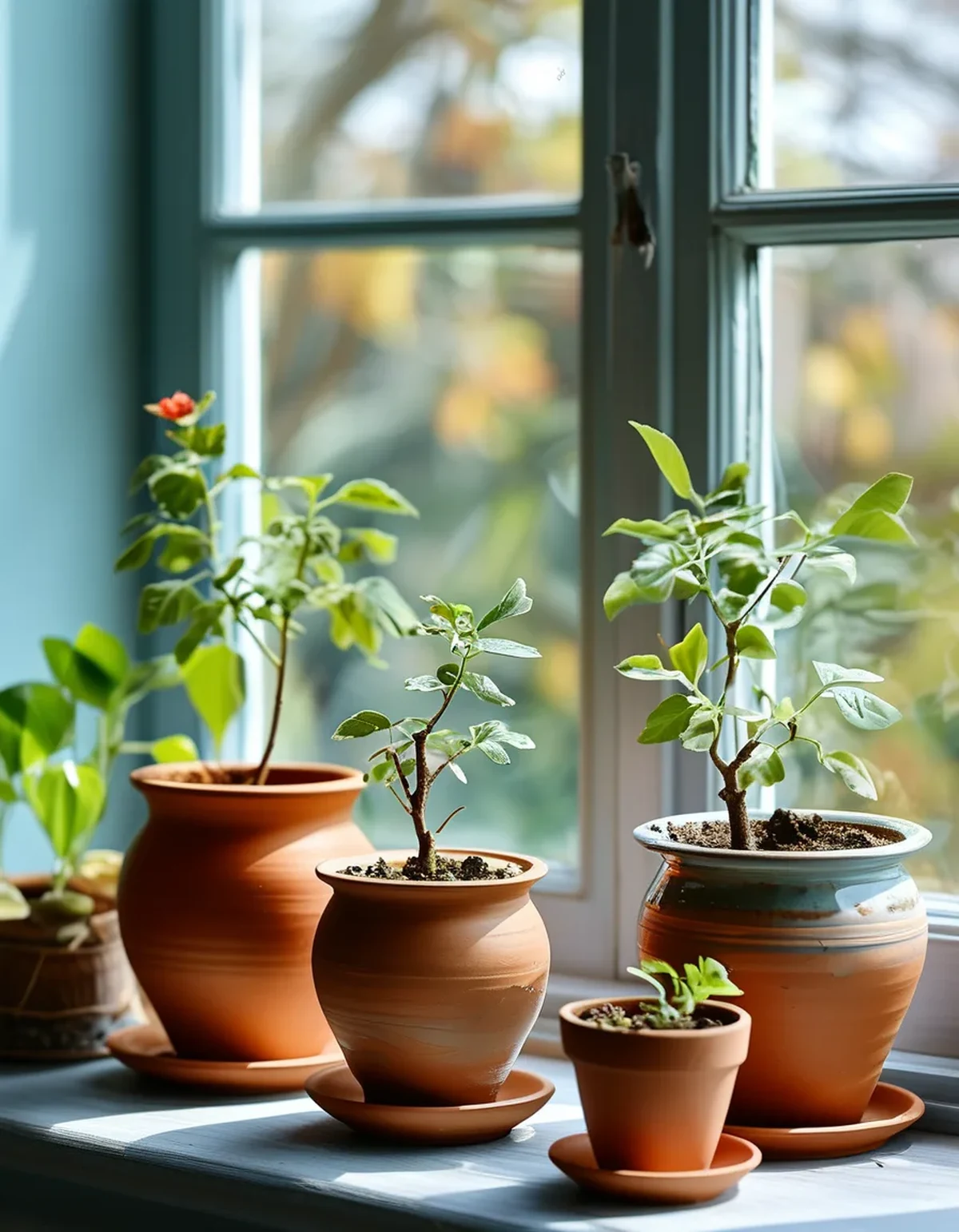
Glazed ceramic seals that pathway. The glaze is essentially a layer of glass, so a glazed pot behaves like plastic regardless of what is underneath it. This surprises people who buy a glazed pot expecting terracotta behavior.
Plastic loses water only from the soil surface and the drainage hole. So does glazed ceramic, metal, and most decorative cachepots.
The practical difference is large. In the same conditions, soil in terracotta commonly dries roughly twice as fast as soil in plastic - and in a dry, heated room the gap widens further.
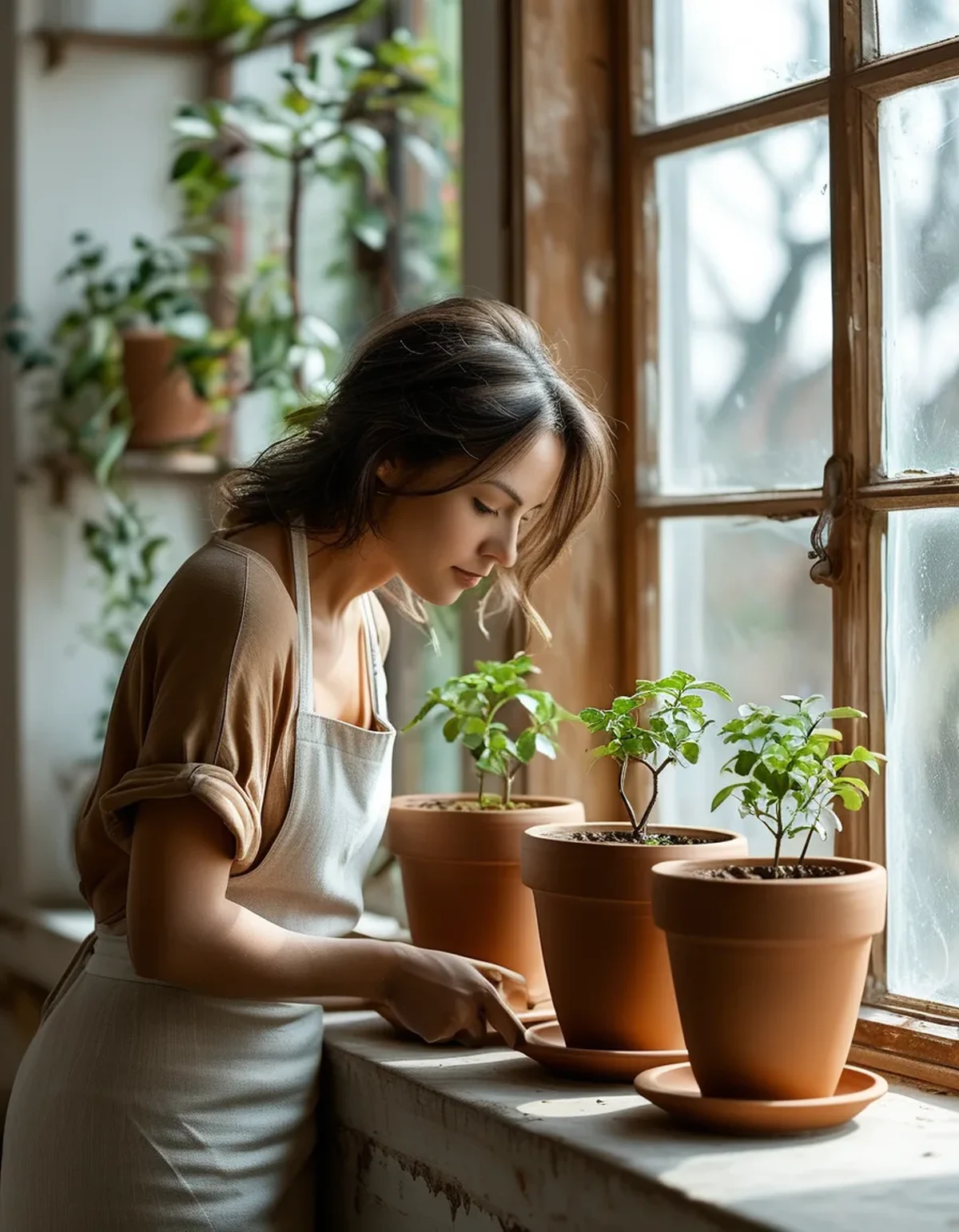
You can see it. A terracotta pot darkens when watered and lightens as it dries. That color change is a free moisture meter built into the pot, and it is more reliable than the finger test in deep pots.
Which material should I use for which plant?
Match the pot to the plant’s water preference and to your own tendency.
Terracotta is right for:
- Succulents and cacti, which need soil to dry fully and are killed by lingering moisture.
- Snake plants, ZZ plants, and other drought-tolerant species.
- Any plant you have previously killed by overwatering. Terracotta is the most forgiving pot for a heavy-handed waterer - it forgives the extra water by evaporating it.
Plastic or glazed ceramic is right for:
- Ferns, calatheas, and prayer plants, which suffer when soil dries out.
- Anything in a very dry or heated room.
- Large plants, where the weight of a big terracotta pot becomes a genuine problem.
- People who travel or forget. A moisture-retaining pot is more forgiving of neglect than of over-attention.
Size matters as much as material. A pot much larger than the root ball holds a volume of wet soil that roots cannot reach, and that soil stays wet - the classic route to root rot after an over-enthusiastic repotting. Go up one size at a time, roughly an inch or two of extra diameter.
And drainage is non-negotiable in any material. A pot without a hole traps water at the bottom where you cannot see it. If you love a decorative pot with no hole, use it as a cachepot with a plastic nursery pot inside that you lift out to water.
How should I water instead of on a schedule?
Check the soil and let the pot tell you the interval.
Weigh the pot. Lift it right after watering, then lift it again a few days later. The weight difference is the most reliable indicator available, works at any depth, and works in any material. It takes about a week to calibrate your hands and then it is instant.
Read the color on terracotta. Dark and cool means damp; pale and dry-feeling means dry.
Use a wooden skewer for deep pots. Push it to the bottom, wait a moment, pull it out. Soil clinging to it means moisture down there - the same principle as testing a cake. The finger test only reaches the top inch or two, which is the part that dries first and tells you the least.
When you do water, water thoroughly. Until it runs from the drainage hole. Small frequent sips wet only the top layer and encourage shallow roots while leaving the root ball dry beneath.
Then empty the saucer within 15 minutes. A pot standing in water has no drainage regardless of how many holes it has.
And expect the interval to change constantly - with light, temperature, humidity, season, and growth. A schedule is a guess about conditions that keep changing, which is why it fails eventually even when it works for a while.
Myth vs Fact: Pots and Watering
Myth: Terracotta is always the better choice. Fact: it is better for plants that want to dry out and for people who overwater. For a moisture-loving fern in a heated apartment, terracotta makes life harder for both of you.
Myth: A layer of gravel at the bottom improves drainage. Fact: it does the opposite. A coarse layer beneath fine soil raises the saturated zone because water does not readily cross the boundary between different textures - so the soil above stays wetter, not drier. Use the whole pot for soil and rely on a drainage hole.
Myth: Bigger pots mean less frequent watering, so they are easier. Fact: a pot too large for the root ball holds unreachable wet soil, which is a leading cause of root rot after repotting. Size up gradually.
Myth: Self-watering pots are foolproof. Fact: they work well for consistently thirsty plants and badly for succulents and drought-tolerant species, which need genuine dry periods.
Myth: If a pot has no drainage hole, careful watering is enough. Fact: you cannot see the water at the bottom of an opaque pot, and it accumulates. Use it as a decorative outer pot instead - the cachepot method works perfectly and removes the risk.
Does this change when the heating comes on?
Substantially, and this is the season when pot material matters most.
Indoor heating drops humidity sharply, often into the 20-30 percent range in winter. Terracotta responds immediately - evaporation through the walls accelerates, and a plant that needed water weekly in September may need it every three or four days in November.
Meanwhile, light is decreasing. Less light means slower growth and less water uptake by the plant itself. So the two forces work in opposite directions, which is exactly why fall is when watering routines break down. The soil surface dries fast while the root zone stays wet - and a finger test on the top inch tells you to water when the bottom of the pot does not need it.
Use the weight test through the fall, not the surface test. It is the only method that sees the whole pot.
And most plants slow down substantially in low light. Reduced growth means reduced water need, and the most common autumn houseplant problem is overwatering a plant that has quietly stopped growing.
Keep plants away from radiators and heating vents. A plant in a warm draft in a terracotta pot can dry out in a day or two, and the constant hot dry air is harder on foliage than the low humidity alone.
FAQ: Pot Material Questions, Answered
Can I put a terracotta pot inside a decorative outer pot?
Yes, and it partially defeats the purpose - the outer pot blocks evaporation from the sides. It still works, just closer to plastic behavior. Lift it out to water and let it drain fully before returning it.
Why does my terracotta pot have a white crust on the outside?
Mineral deposits from tap water and fertilizer working their way through the clay. It is harmless and a sign the pot is doing its job. Scrub with a brush and vinegar if you dislike the look.
Should I repot into terracotta if I have root rot?
Terracotta helps prevent recurrence, but first deal with the rot itself - remove the plant, cut away soft brown roots, and repot into fresh dry soil. The pot is prevention, not treatment.
TL;DR:
- Terracotta is porous and dries roughly twice as fast as plastic or glazed ceramic.
- Glazed ceramic behaves like plastic, not like terracotta - the glaze seals the pores.
- Match the pot to your habit: terracotta if you overwater, plastic or glazed if you forget.
- Weigh the pot instead of watering on a schedule - the finger test only reads the top inch.
- Gravel at the bottom makes drainage worse, not better, and oversized pots cause root rot.
- When the heating comes on, terracotta dries much faster while plants need less - use the weight test.
Lift each of your pots right after the next watering and again three days later. Your hands will learn the interval faster than any schedule could teach it.
Keep Reading
This article is for general informational and styling purposes only. Fit, sizing, and product availability may vary.