Why the First Cold Night of Autumn Damages Plants on Windowsills
Quick Answer: Glass is a poor insulator, so on a cold night the air in the few centimetres immediately against a window can sit several degrees below room temperature — sometimes 5 to 8C lower in single glazing. Tropical houseplants start suffering chilling damage well above freezing, often below about 10 to 12C, and the damage does not appear immediately. Symptoms show up days later as sudden leaf drop, dark patches, or wilting that looks exactly like overwatering — which is why almost nobody blames the window.
The heating has not come on yet. The room feels fine. You go to bed with everything looking healthy.
Four days later the monstera drops two leaves, the calathea has dark patches, and the pothos nearest the glass looks limp in soil that is still damp.
You water less. You water more. You check for pests. Nothing adds up — because the event that caused it happened on Tuesday night and the plant is only telling you about it now.
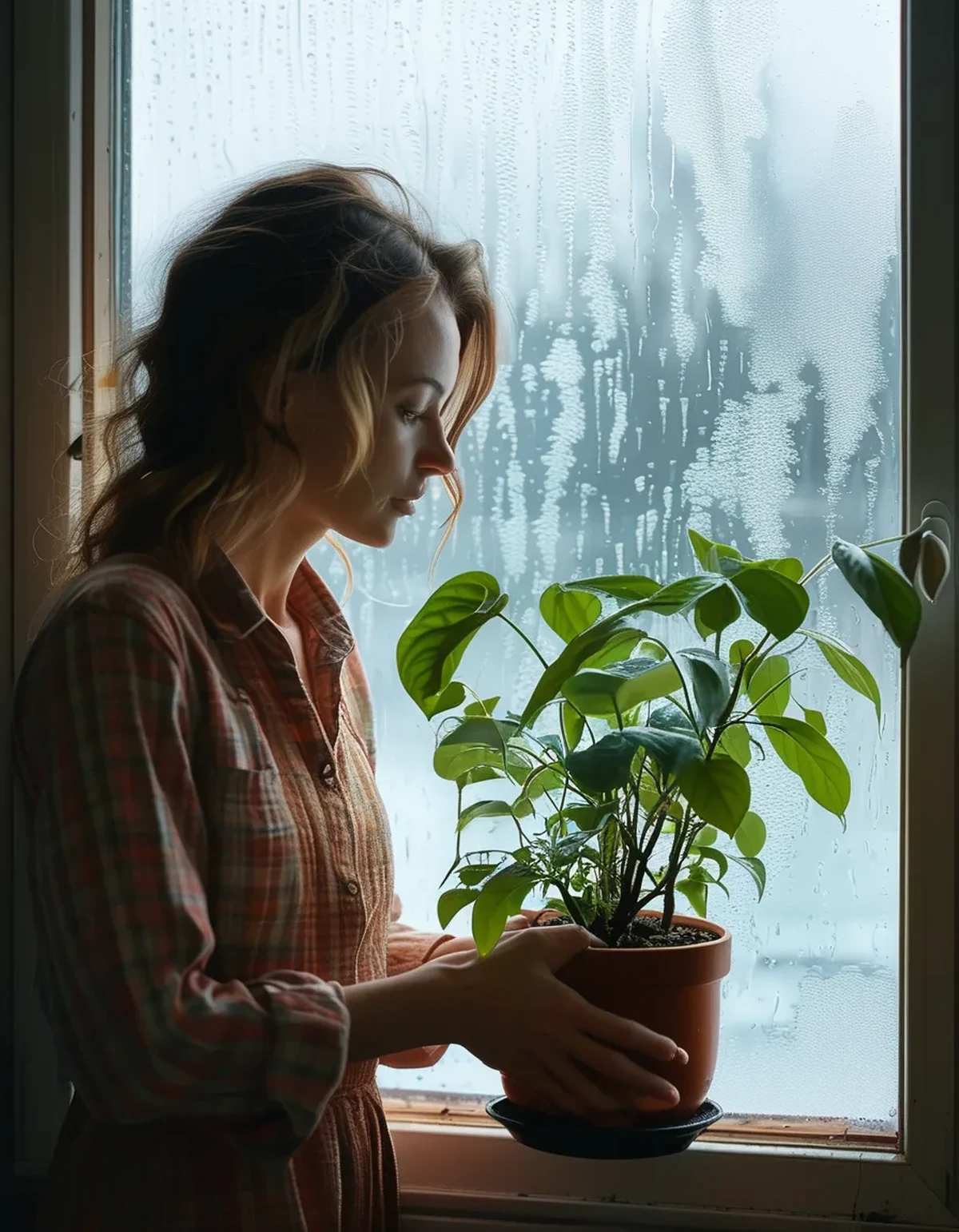
Why is the air at a window so much colder than the room?
Because glass conducts heat out of the room far faster than a wall does, and the air touching it cools accordingly.
A wall has insulation. A window mostly does not. Even good double glazing loses heat many times faster per square metre than the wall around it. Single glazing is dramatically worse.
What happens overnight:
- Outside temperature drops.
- The glass surface cools toward the outside temperature.
- Air in contact with the cold glass cools, becomes denser, and sinks down the window — the draught you feel at your ankles near a window on a cold day.
- Warmer room air moves in to replace it, cools, and sinks too. The cycle runs all night.
The result is a persistent cold layer hugging the glass and the sill. In a room sitting at a comfortable 20C, the air a few centimetres from single glazing can be 5 to 8C colder; behind a closed curtain, colder still, because the curtain cuts the sill off from the room’s heat while doing nothing to stop the glass losing heat.
The curtain detail catches a lot of people. Closing curtains at night is good for your heating bill and bad for anything on the sill — you have created a small, unheated compartment between the fabric and the glass.
How cold is too cold for a houseplant?
Well above freezing, which is the part that surprises people.
Most common houseplants are tropical or subtropical, and they experience chilling injury — cell-level damage from cold that has nothing to do with ice.
Rough thresholds to work with:
- Below about 15C, growth slows and water uptake through the roots drops.
- Below about 10 to 12C, sensitive tropicals begin sustaining actual damage. Calathea, stromanthe, and most begonias sit here.
- Below about 7C, damage becomes likely for the majority of tropical foliage plants.
- Around 0 to 4C, expect serious damage or death for anything tropical.
More tolerant plants — snake plant, ZZ plant, many succulents, cast iron plant — handle the low teens without complaint, which is exactly why they survive on the same windowsill that kills a calathea.
The critical mechanism: cold roots stop taking up water efficiently while the leaves keep transpiring. The plant effectively experiences drought in wet soil. That is why cold-damaged plants wilt in damp compost and get watered even more — accelerating root rot on top of the cold injury.
Why does the damage take days to appear?
Because cold injury damages cell membranes, and membrane failure expresses itself slowly.
On the night itself: cell membranes in the leaf tissue lose integrity. Nothing visible happens.
Over the next one to five days: the damaged cells leak, tissue collapses, and the plant sheds what it cannot maintain. Now you see it.
What it looks like when it arrives:
- Sudden leaf drop with leaves that still look green — the classic tropical cold response.
- Dark, water-soaked or blackened patches, usually starting on the leaf edges nearest the glass.
- Limp, wilting leaves in damp soil — the drought-in-wet-soil signature.
- Crispy brown margins on the side facing the window specifically.
The asymmetry is your best diagnostic tool. Overwatering damages the whole plant fairly evenly. Cold damages the side facing the glass, and often only the leaves that were actually touching or nearly touching it. If the damage has a clear directional pattern pointing at the window, the window did it.
Check the weather from four or five days ago, not last night. That is where the cause lives.
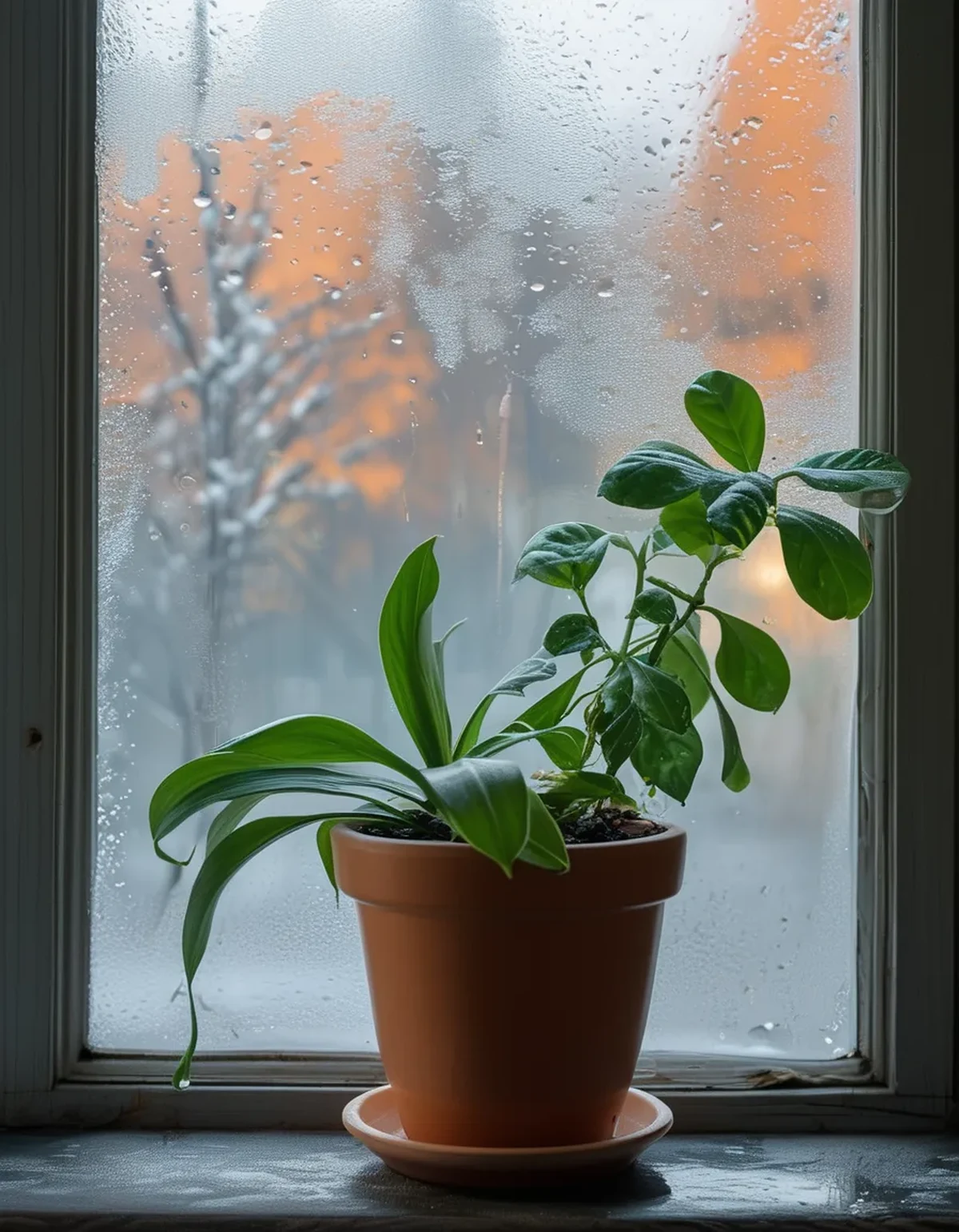
What Nobody Tells You About the First Cold Snap
The first cold night of the season does disproportionate damage, and there is a reason beyond bad luck.
Plants acclimate — slowly. Given gradually falling temperatures over weeks, many plants adjust their cell chemistry and tolerate cold better than their nominal threshold suggests. That process takes time they have not had.
The first cold snap arrives with a fully un-acclimated plant. Your monstera has spent all summer in warm, humid, stable conditions. It has zero cold conditioning. A night that it might shrug off in November can hurt it in September.
Three compounding factors nobody accounts for:
- The heating is not on yet. In the shoulder season, rooms cool further overnight than they will once the thermostat takes over — often the coldest indoor nights of the entire year happen in autumn before heating starts, not in midwinter.
- Windows are still being opened during the day. Warm afternoon, window open, forgotten at bedtime.
- Nobody is watching the forecast for plants. You check it for what to wear, not for whether the sill drops below 10C.
The single most useful habit: in the second half of September, start checking the overnight low. Once the forecast goes below about 10C outside, move sill plants back — 30 to 40cm is usually enough to leave the cold layer entirely, and it costs you nothing.
What should you actually do about it?
Prevention is trivial. Treatment is mostly patience.
Prevention
- Move plants off the sill on cold nights — back onto a table or shelf 30 to 40cm from the glass. Return them in the morning if you want the light.
- Never leave a plant between a closed curtain and the glass. If the curtain has to close, the plant comes out first.
- Insulate the sill itself. A cork mat or folded towel under the pot stops cold conducting through the sill into the root ball, which is where the worst of it happens.
- Watch the roots, not the leaves. Root temperature is what governs water uptake. A pot standing on a cold stone sill is colder than the air around the leaves.
- Check for draughts. An unnoticed gap in an old frame turns a mild night into a damaging one for the plant right next to it.
If damage has already happened
- Move the plant somewhere stable and warm immediately.
- Do not water on the usual schedule. Cold-damaged roots take up less water, and normal watering now drives root rot. Check the soil and wait.
- Do not fertilise. A damaged plant cannot use it.
- Leave the damaged leaves alone for a week or two. Some recover partially, and the plant reclaims resources from ones it is going to drop. Remove them once they are clearly finished.
- Expect recovery to take weeks, and expect new growth before the old leaves improve. Old damage does not heal; it gets replaced.
FAQ: Cold Windows and Houseplants, Answered
How far from the window is far enough?
For most rooms, 30 to 40cm gets a plant out of the cold layer that clings to the glass. If you can feel a temperature difference with your hand at the plant’s position on a cold night, it is still too close.
Does double glazing solve it?
It reduces it substantially but does not eliminate it. Double glazing still loses far more heat than the wall around it, so a cold layer still forms — just a smaller one. Sensitive plants like calathea can still take damage against modern glazing on a genuinely cold night.
Can a cold-damaged plant fully recover?
The damaged leaves will not repair, but the plant usually can, provided the roots were not badly chilled and you avoid overwatering during recovery. Judge recovery by new growth appearing over the following weeks, not by whether existing leaves improve.
TL;DR:
- Air against a window can sit 5 to 8C below room temperature overnight, and closing the curtain makes the sill colder still.
- Tropical houseplants take chilling damage well above freezing — often below 10 to 12C — through root water uptake failing while leaves keep transpiring.
- Symptoms appear days later, and look almost exactly like overwatering. The tell is damage on the window-facing side only.
- From late September, check the overnight low and move sill plants back 30 to 40cm whenever it drops below about 10C.
The first cold night of the season catches plants with no cold conditioning at all, in rooms where the heating has not started yet. It is the single most predictable houseplant casualty of the year — and the fix is moving a pot a foot and a half to the left.
Keep Reading
This article is for general informational and styling purposes only. Fit, sizing, and product availability may vary.