Why Moving a Houseplant Three Feet Can Trigger Leaf Drop
Quick Answer: Light intensity falls off with distance far faster than it looks to your eyes, so moving a plant a few feet from a window can cut the light it receives by half or more. Leaf drop after a small move is usually the plant shedding leaves it can no longer afford to run, not a sign of disease.
You moved it three feet. Same room, same window, still bright. A week later it’s dropping leaves like you did something terrible to it. You kind of did — just not in a way your eyes can register.
Why does such a small move change so much?
Human vision is aggressively adaptive. It compresses an enormous range of brightness into a narrow perceptual band, which is exactly why a room lit at 500 lux and one at 5,000 lux both just read as bright.
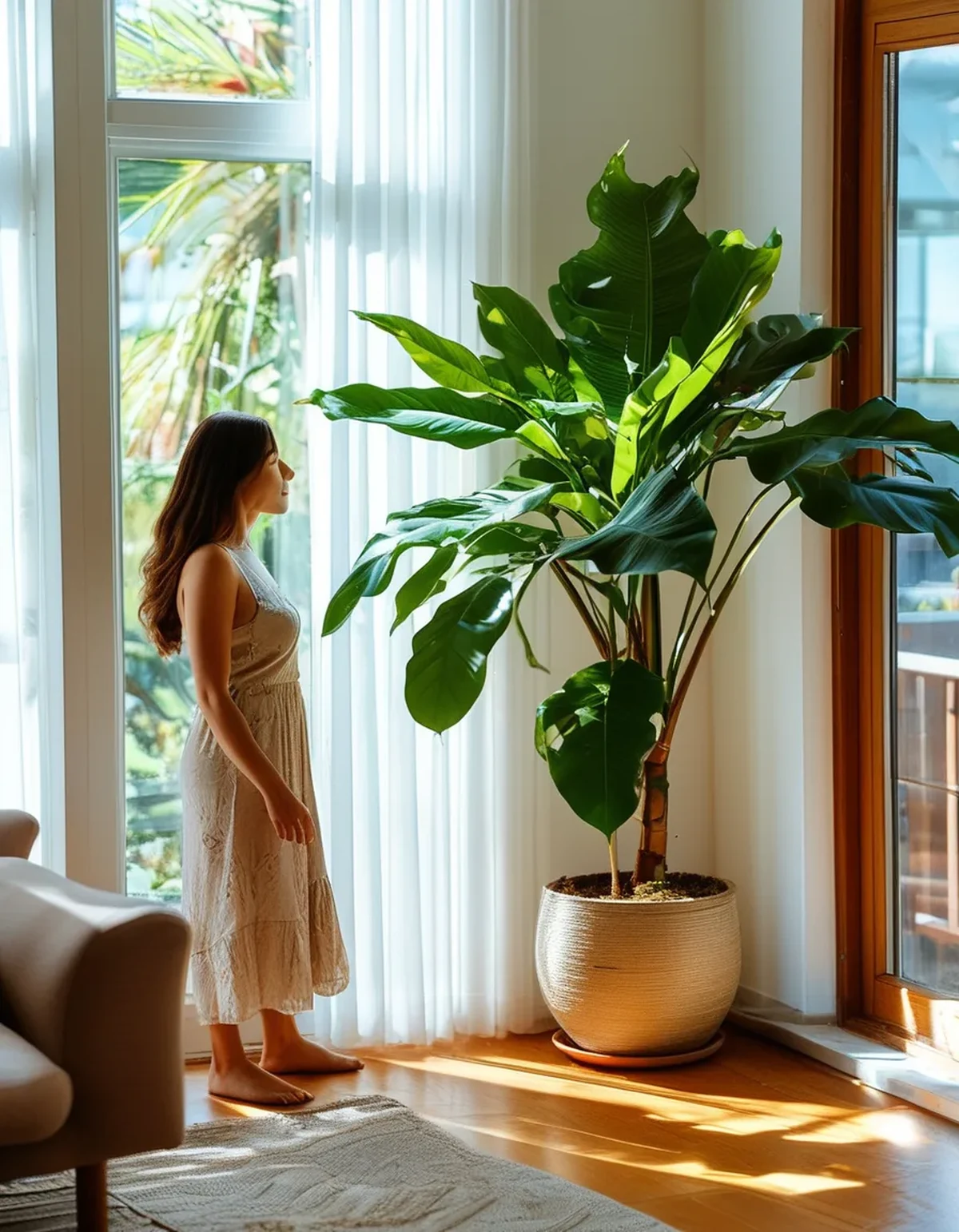
Light intensity from a window drops off sharply with distance, and by a few feet in you can easily be at a fraction of what the plant received at the glass. Your eyes report almost no change. The plant’s photosynthetic budget reports something closer to a pay cut.
What is the plant actually doing when it drops leaves?
Leaves cost energy to maintain. When available light drops, some leaves — usually older, lower, or shaded ones — stop paying for themselves and start running at a deficit.
The plant does the obvious thing: it pulls the usable nutrients out of those leaves and abandons them. That’s why dropped leaves after a move often yellow first rather than browning suddenly. It’s an accounting decision, not an illness.
How long does acclimation actually take?
Most common houseplants take somewhere in the range of two to four weeks to adjust leaf structure and chlorophyll density to a meaningfully new light level. Some, like fiddle leaf figs and certain calatheas, are notably slower and more dramatic about it.
The practical implication: judge a move at four weeks, not at four days. A plant that drops two or three leaves and then stabilizes has acclimated successfully. A plant still dropping leaves in week five has actually been moved somewhere it can’t sustain.

What Nobody Tells You About Moving Plants
Direction matters more than distance. Moving three feet deeper into a room is a large light change; moving three feet sideways along the same window is often almost nothing.
Moving toward more light can also cause damage. A plant acclimated to lower light can scorch in direct sun within a day or two, because it has no protective adaptation built up.
Seasonal drift counts as a move even if you never touch the plant. As the sun angle shifts through late summer into fall, a spot that was ideal in July can quietly become underlit by October — same shelf, different light.
Rotating is not moving. Quarter-turning a plant weekly evens out growth without triggering the acclimation response, because total light exposure barely changes.
The pot dries slower in lower light. Less light means less transpiration, which means your old watering schedule is now overwatering. This is the step that turns a survivable move into root rot.
How do you move a plant without triggering the drop?
Stage it. Move roughly half the distance, leave it two weeks, then complete the move. That gives the plant a chance to adjust leaf structure incrementally rather than all at once.
If staging isn’t practical, at minimum adjust watering immediately rather than waiting for signs. Check soil moisture by finger or meter before every watering for the first month, and expect the interval to stretch. A free phone light meter app is imprecise but perfectly adequate for comparing two spots relative to each other — which is all you actually need.
FAQ: Houseplant Moving Questions, Answered
Should I fertilize a plant that’s dropping leaves after a move?
No. It’s shedding because of a light deficit, not a nutrient one, and fertilizing a stressed plant with reduced uptake tends to make things worse.
Can I move it back if it starts dropping?
You can, but moving twice in quick succession means two acclimation cycles. Unless the drop is severe, it’s usually better to hold the new position for four weeks first.
Is leaf drop ever a sign of something other than light?
Yes — sudden drop can also follow drafts, temperature swings near vents or doors, or root problems from overwatering. If the new spot is near an air vent, suspect that before light.
TL;DR:
- Light intensity drops off steeply with distance from a window; your eyes can’t detect it
- Post-move leaf drop is usually the plant shedding leaves it can no longer afford
- Give a move four weeks before judging it, and stage long moves in two steps
- Lower light means slower drying — adjust watering immediately or risk root rot
- Seasonal sun-angle change is a move the plant experiences even when nothing was touched
A plant that drops a few leaves and then holds steady has done exactly what it was supposed to do. The one worth worrying about is the one still shedding in week five.
Keep Reading
This article is for general informational and styling purposes only. Fit, sizing, and product availability may vary.