Why Late August Is the Last Good Repotting Window of the Year
Quick Answer: Repotting is minor surgery, and recovery requires active growth — which for houseplants is powered by light. In late August, plants still ride long bright days and warm temperatures, so disturbed roots regrow into fresh soil within two to four weeks. By late September, falling light has already shifted most houseplants toward semi-dormancy: new soil stays wet longer, damaged roots repair slowly, and the classic autumn-repot spiral — cold wet pot, stalled roots, rot — begins. The working deadline in most of the US is roughly Labor Day, give or take a week of your local light.
If a plant on your shelf has been telling you it needs a bigger pot, this is the fortnight to listen. Here is why, which plants to prioritize, and the low-stress method.
What does a plant actually need to recover from repotting?
Three inputs — and every one of them is abundant now and scarce in ten weeks.
Repotting always damages roots. However gentle your hands, fine root hairs — the structures doing the actual water absorption — tear by the thousands, and the plant must regrow them into the new soil before it can drink normally again. Root regrowth is construction, and construction runs on the energy budget photosynthesis provides.
Input one: light. Late August still delivers 13-plus hours of day length across most of the US, at high intensity. That surplus is what funds rapid root rebuilding. The same plant in November light is running on maintenance rations, and construction is the first budget cut.
Input two: warmth. Root growth in most common houseplants runs best with soil in the high 60s to low 80s — August room and windowsill temperatures, effortlessly. Cool autumn nights near a window drop soil into the sluggish zone.
Input three: water throughput. A recovering plant in fresh soil needs that soil to dry at a healthy rhythm — moist, then approaching dry, then watered again. Warm bright conditions cycle a pot in days. The same pot in a cool dim October room stays saturated for two weeks, and saturated soil around wounded roots is the exact recipe for rot.
A healthy plant repotted this week typically shows resumed growth within two to four weeks — fully re-established before the light meaningfully drops. That timing is the entire argument.
Why does the window actually close in September?
Because light collapses faster than temperature, and plants read light.
The slide is steeper than indoor life makes it feel: across September and October, most of the US loses two to three minutes of daylight every single day — call it an hour-plus over September alone — while the sun’s angle drops and windowsill intensity falls with it. Your thermostat hides autumn from you; it cannot hide it from a plant reading photons. Most houseplants respond by downshifting into slow growth or semi-dormancy regardless of how warm the living room stays.
A plant repotted after that downshift faces the worst version of every recovery variable at once. Root repair is slow because energy income is low. The fresh soil — which always retains more water than a root-filled old pot, because there are no roots in it yet drinking — stays wet for weeks in cool dim conditions. Wounded roots sitting in cold saturated soil begin to fail, failing roots drink even less, the soil stays wetter still, and the spiral tightens. The plant owner, seeing droop, often waters again.
This is the mechanism behind the folk observation that autumn repots go badly. It is not superstition — it is a resource gap. The surgery was identical; the recovery ward changed.
The honest boundaries: late August through very early September is comfortably inside the window in most of the country. Mid-September is a judgment call that favors only bright rooms and fast-recovering species. October is for emergencies only — and there is a real emergency list, below.
How do you repot now, the low-stress way — and which plants go first?
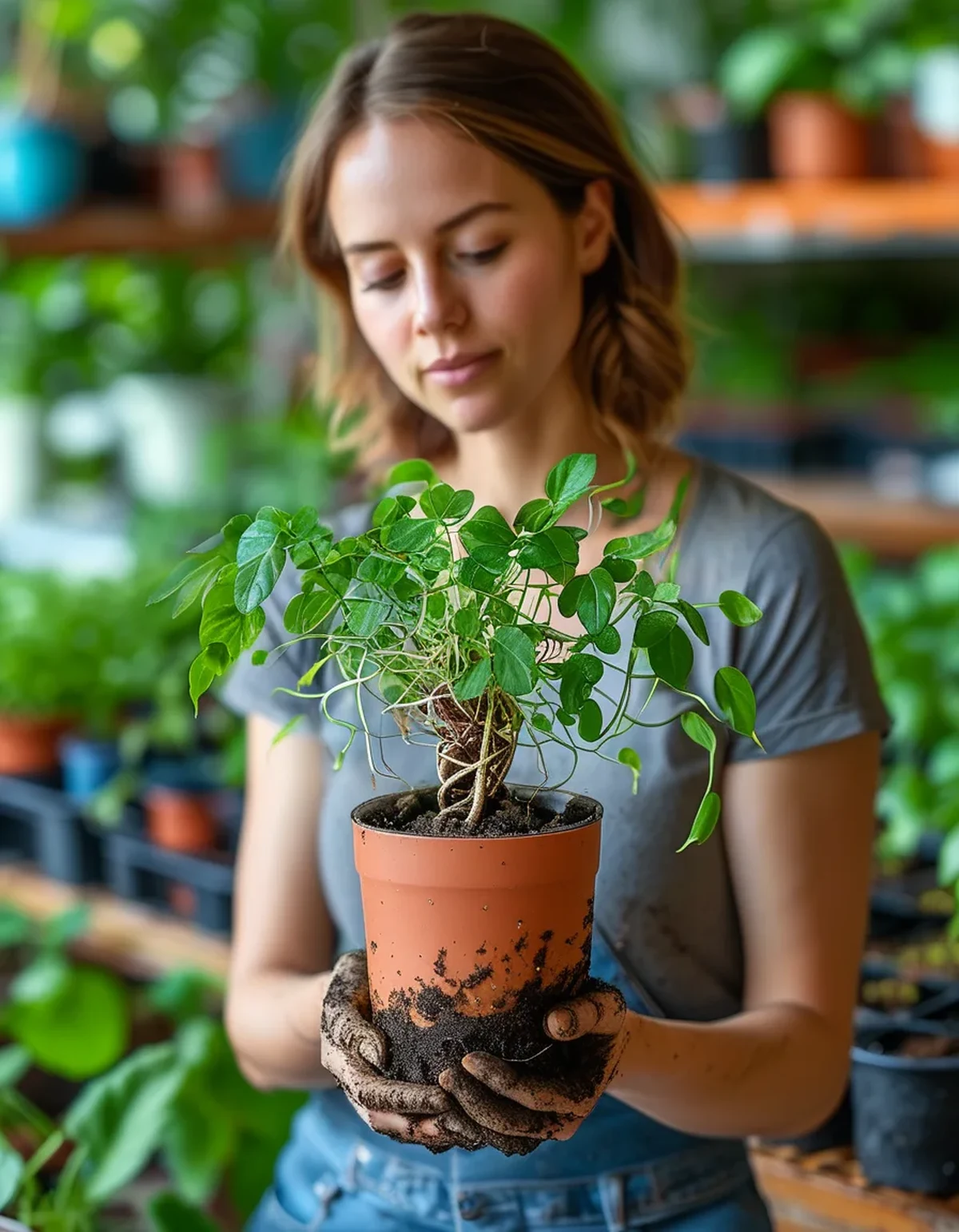
Triage first. Priority one: plants drinking themselves dry in days — water racing straight through, pot feather-light constantly, roots circling out the drainage holes or physically lifting the plant. These are rootbound and living on a shrinking water reservoir; they gain the most from the window. Priority two: anything in degraded, compacted, or gnat-plagued soil. Skip: plants doing fine (spring is equally good for them), anything currently blooming, and new arrivals mid-acclimation.
Then the method, tuned for fast recovery:
Size up modestly — one to two inches of new diameter, no more. The classic kindness error is a big pot for room to grow; all that rootless soil holds water the plant cannot drink, which is the rot recipe again, even in August. Snug recovers fastest.
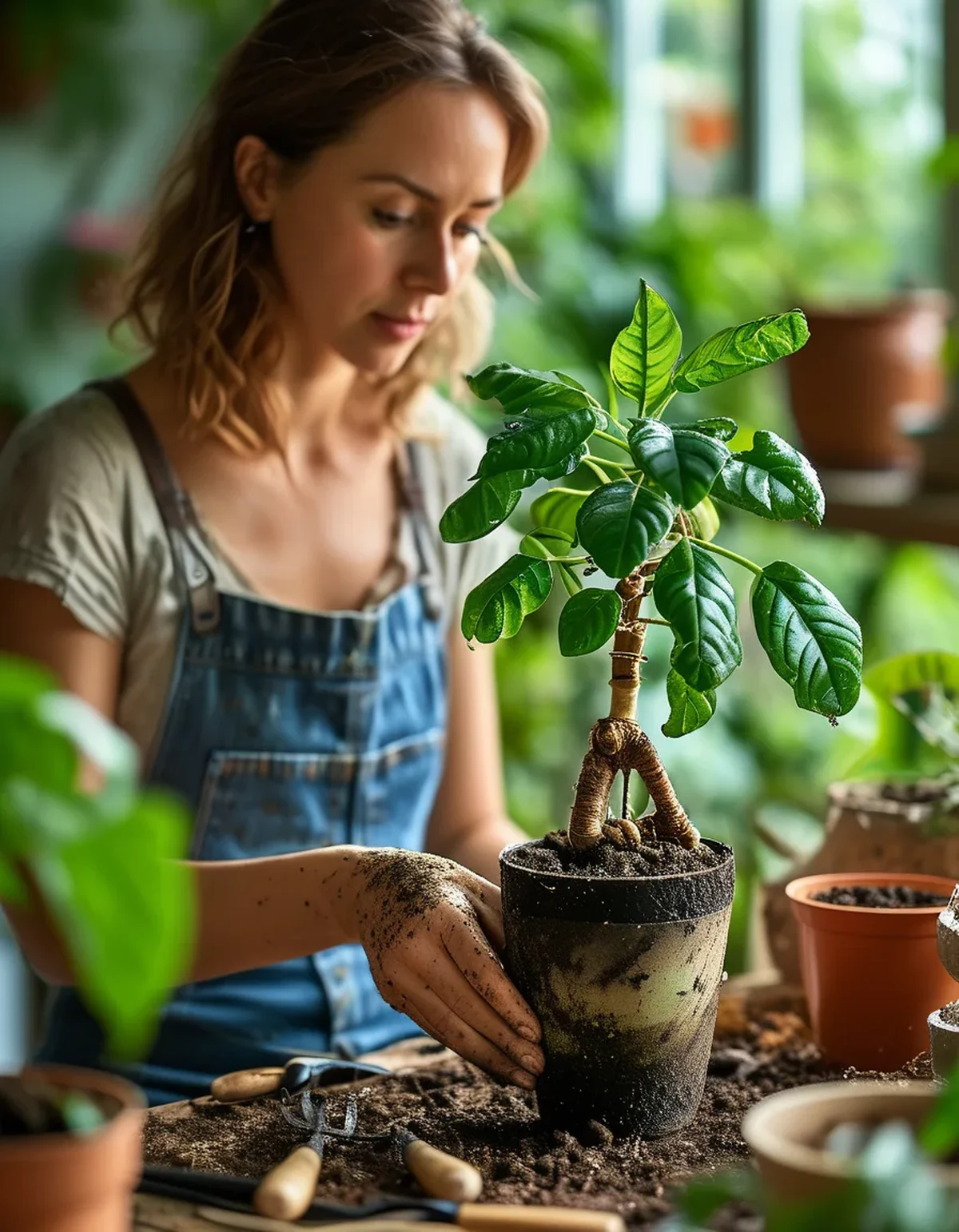
Disturb roots minimally. Slide the root ball out, loosen the outer inch and any circling bottom roots with fingers, and leave the interior intact. Full soil replacement and aggressive root-teasing are for spring, when recovery budgets are fat.
Fresh, airy mix; water once, thoroughly; then restraint. Water settles soil around roots — after that, let the pot approach dryness before the next drink, and resist sympathy watering when the plant sulks for a week. Droop in week one is transplant adjustment, not thirst.
Hold fertilizer four weeks. Fertilizer salts sting wounded roots, and autumn plants need little anyway. Fresh mix carries enough.
Return it to the same bright spot, out of harsh direct afternoon sun for the first week. Same light address, gentler dose — recovery without relocation stress stacked on top.
What Nobody Tells You About Fall and Winter Repotting
There is a real emergency list that overrides the calendar. Active root rot, a shattered pot, soil that smells sour and swampy, or a severe pest infestation in the soil — these get repotted the day you find them, in any month, because the alternative is worse than a slow recovery. Emergency winter repots want the snuggest viable pot, the airiest mix, and the brightest window you own.
Top-dressing is the off-season substitute. Miss the window on a plant that merely wanted refreshing? Scrape away the top inch or two of old soil and replace it with fresh mix — no root disturbance, meaningful nutrition and structure gain, completely safe in any season. It buys most plants a comfortable ride to spring.
Terracotta becomes an asset in the dark months. The porous walls that dry pots annoyingly fast in July become insurance in November, pulling moisture out of soil that would otherwise sit wet. If a borderline-late repot is happening anyway, clay is the safer vessel; glazed and plastic pots hold winter water longest.
Grow lights genuinely reopen the window. A plant living under a decent full-spectrum light on a 12-hour timer never receives the autumn signal — for that plant, the repotting season is whenever you say it is. This is the honest exception to everything above.
Semi-dormancy is not distress. The plant that stops producing new leaves in October after an August repot is not failing — it re-rooted on schedule and then downshifted on schedule. The dividend arrives in March, when the plants repotted this week are reliably the first out of the gate.
FAQ: Late-Season Repotting, Answered
How do I know for certain a plant is rootbound enough to justify it?
Tip it out and look — the plant tolerates this inspection fine. A solid mesh of circling roots with little visible soil says yes; plentiful soil around modest roots says wait for spring. The eyeball test beats every rule of thumb, and it takes thirty seconds.
Can I still propagate cuttings this late?
Water-rooted cuttings on a bright windowsill are fine into early fall — rooting in water dodges the wet-soil risk entirely. Pot them up promptly once roots reach an inch or two, while the light lasts, or overwinter them in water and pot in spring.
My repotted plant dropped two leaves in week one. Rescue moves?
Usually none needed — shedding a leaf or two while re-rooting is normal triage, especially on the oldest leaves. Intervene only for spreading yellow mush or soil that refuses to dry: that pattern means overwatering on wounded roots, and the fix is restraint, warmth, and light, not more water or feed.
Does any of this apply to outdoor container plants coming inside for winter?
Repot-and-relocate in the same week is a double stress worth avoiding. Bring pots in before nights dip below the low 50s, let them acclimate a few weeks, and save any repotting for spring — with one exception: inspect and top-dress now, because hitchhiking pests in outdoor soil are the bigger autumn threat indoors.
TL;DR:
- Repotting recovery runs on light-funded root regrowth; late August still supplies it, and the budget collapses through September.
- Autumn repots spiral: cool dim rooms keep fresh soil wet for weeks around wounded roots — the classic rot sequence.
- Prioritize rootbound fast-driers now: size up one to two inches, disturb roots minimally, water once, hold fertilizer a month.
- After the window: top-dress instead, use terracotta for borderline cases, honor the emergency list, and remember grow lights suspend the calendar.
This weekend, tip your three most suspicious pots out for the thirty-second root check. Whatever shows a solid root mesh gets fresh soil before Labor Day — and gets to spend the whole winter already home.
Keep Reading
This article is for general informational and styling purposes only. Fit, sizing, and product availability may vary.