Why Your Houseplants Drop Leaves the Week You Turn the Heating On
Quick Answer: Turning on the heating causes leaf drop mainly through a sudden collapse in humidity, not through warmth. Forced-air heating can drop indoor relative humidity from a comfortable 50% to under 25% in days, while hot dry air near vents also increases water loss from leaves. Move plants away from vents, group them together, and adjust watering — the soil dries faster now, but roots still need less water than in summer.
The heating came on Tuesday. By Friday your fiddle leaf fig has dropped three leaves and the calathea edges are crisp brown.
Your plants are not reacting to being warm. They are reacting to a step change in the air around them, and it happened faster than they can acclimate to.
Here is what actually changed and what to do about each part.
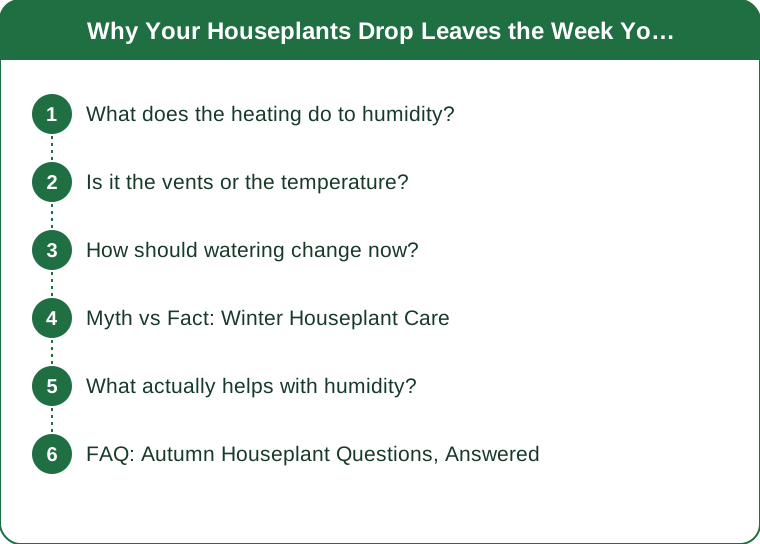
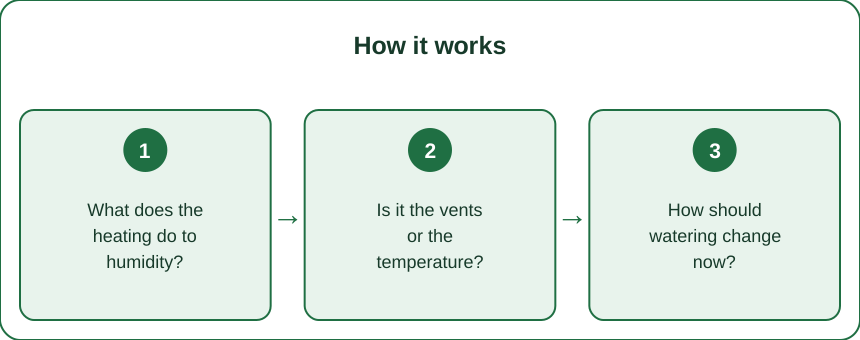
What does the heating do to humidity?
It causes the single most abrupt environmental change your plants experience all year.
Heating air without adding moisture drops relative humidity sharply. A home at a comfortable 50% relative humidity in September can fall below 25% within days of the heating starting — and forced-air systems are the worst offenders because they also move that dry air around constantly.
For context, most popular tropical houseplants come from environments in the 60-80% range. They tolerate 40-50% indoor conditions reasonably well. Below about 30% they begin to show it, and thin-leaved plants show it first.
The symptoms, in the order they usually appear:
- Crispy brown leaf edges and tips. The classic dry-air signature, and quite different from the soft yellowing of overwatering.
- Leaf curling, as the plant reduces its exposed surface area.
- Drop of older leaves, which the plant sheds to reduce total water loss.
- Flower and bud drop on anything flowering.
Calatheas, ferns, marantas, and alocasias react fastest. Succulents, snake plants, and ZZ plants barely notice.
Is it the vents or the temperature?
Almost always the vents, and this is the most common single mistake in autumn plant care.
A plant sitting near a heating vent or radiator experiences a hot, extremely dry, moving airstream. Moving dry air strips moisture from leaves far faster than still dry air of the same humidity, and the temperature swings between heating cycles add further stress.
The other side of the same problem: plants near a cold window now sit between a cold pane and a warm room, and a leaf touching cold glass on a frosty night can be damaged outright.
The fixes are simple and free:
- Move plants at least three feet from any vent or radiator, and out of the direct airstream regardless of distance.
- Pull plants a few inches off cold window glass, keeping the light without the contact.
- Check where the air actually moves. Hold a tissue up near your plants when the heating runs. If it moves, so does the air around your plant’s leaves.
- Watch doorways. Repeated drafts from an exterior door are just as damaging as a vent, and much easier to overlook.
How should watering change now?
In two opposite directions at once, which is why this trips people up.
The soil surface dries faster because the air is dry and warm. This makes plants look thirsty and tempts more frequent watering.
The plant needs less water overall because light levels have dropped sharply and growth has slowed. Less growth means less water use.
Watering on the same schedule you used in summer is the leading cause of autumn root rot, and root rot symptoms — drooping, yellowing, leaf drop — look very similar to the dry-air symptoms you are actually seeing.
The way through:
- Check by weight or by depth, never by surface. Push a finger two inches in, or lift the pot and learn its dry and wet weights. The surface is now a poor indicator.
- Expect to water less often, and thoroughly when you do. A full soak until water runs out, then a genuinely dry-down period.
- Stop fertilizing, or reduce it substantially. Most houseplants slow markedly in autumn, and feeding a plant that is not growing builds up salts that damage roots.
- Empty the saucer. Standing water is a bigger problem when the plant is drinking slowly.
Myth vs Fact: Winter Houseplant Care
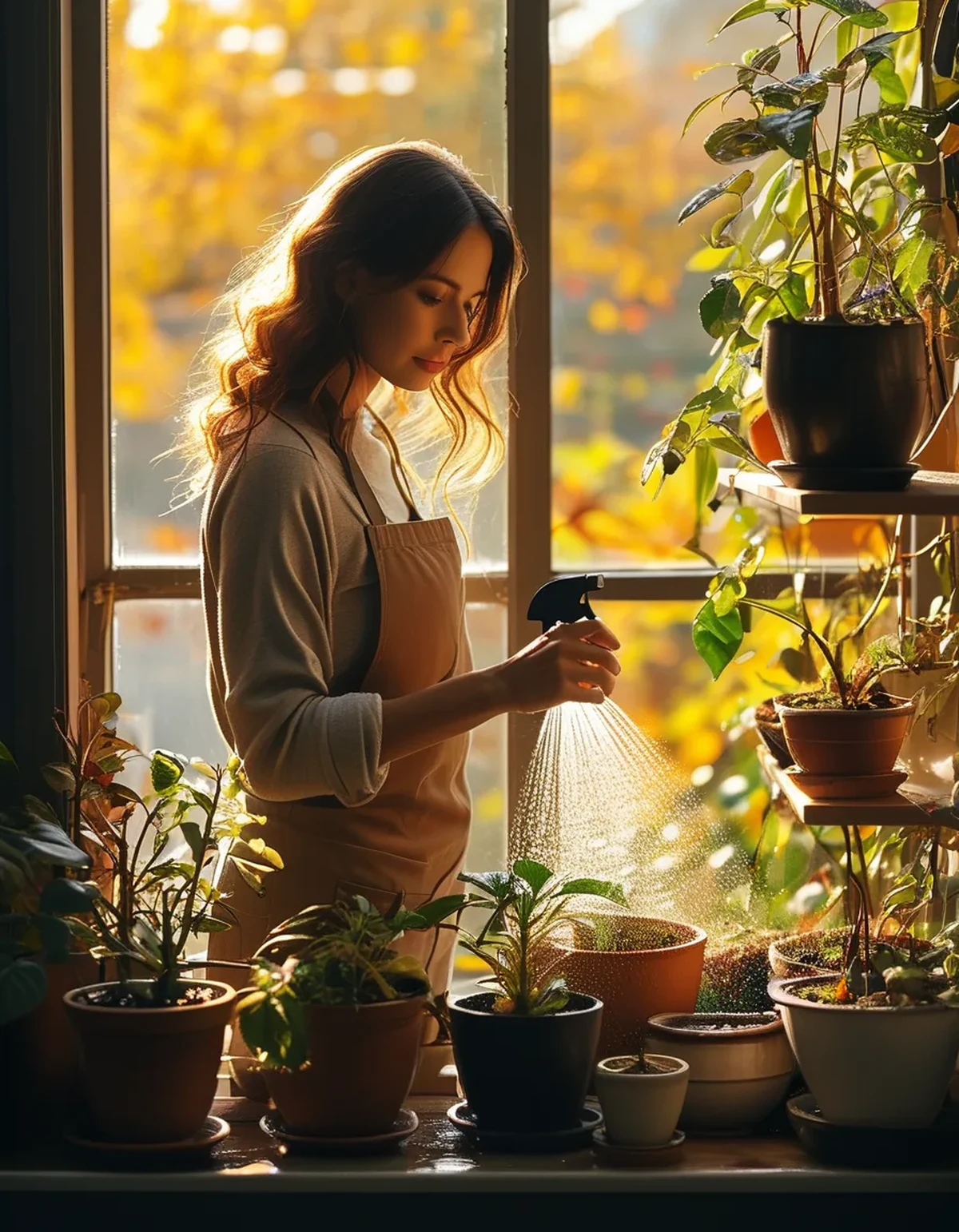
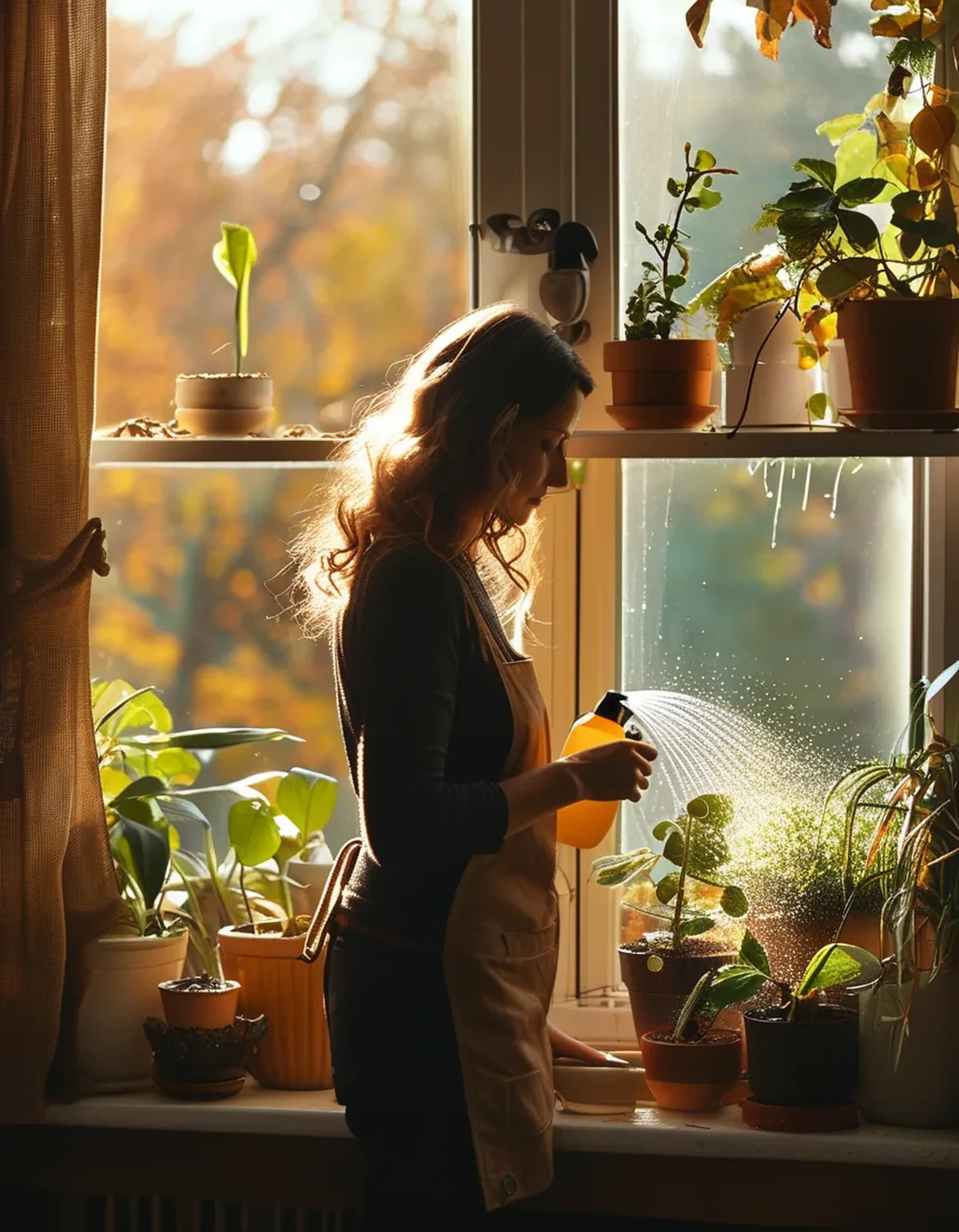
Myth: Misting fixes low humidity. Fact: Misting raises humidity around a leaf for a few minutes and then it is gone. It does not change ambient humidity in any lasting way. It is not harmful for most plants — it is just far less effective than people believe. A humidifier, a pebble tray, or grouping plants all do more.
Myth: Leaf drop means you are underwatering. Fact: Leaf drop in autumn is far more often about dry air, reduced light, or overwatering. Check the soil at depth before you water. Reflexively adding water to a leaf-dropping plant in October is how people kill plants that would have recovered.
Myth: Plants need to be kept warm in winter. Fact: Most houseplants are comfortable in the same range as people, and many prefer slightly cooler nights. Rapid fluctuation is what harms them, not moderate coolness. A plant near a heating vent experiences worse swings than one in a cool, stable room.
Myth: Brown leaf tips mean the plant is dying. Fact: Brown tips are cosmetic damage to already-formed tissue and will not recover, but the plant is usually fine. Trim them if they bother you and fix the conditions — new growth will come in clean.
What actually helps with humidity?
In descending order of effectiveness.
A humidifier. By a wide margin the most effective option. A small unit near a plant group, run through the day, holds humidity in the 40-50% range. If you have plants that genuinely need humidity, this is the answer and everything else is a partial measure.
Grouping plants together. Plants transpire, so a cluster creates a modestly more humid microclimate. Free, and genuinely effective with enough plants.
Pebble trays. A tray of pebbles with water below the pot base. Modest effect in the immediate vicinity, and it must not let the pot sit in water.
Moving humidity-sensitive plants to a bathroom or kitchen. These rooms run considerably more humid. A calathea in a bright bathroom often thrives where the same plant struggled in the living room.
A hygrometer, so you actually know. They cost very little and remove all the guesswork. Most people are surprised by how low their winter humidity is — the number tells you whether you have a humidity problem at all.
And accept the reasonable option: if you cannot maintain humidity, choose plants that do not need it. Pothos, snake plants, ZZ plants, and most succulents handle dry winter air without complaint.
FAQ: Autumn Houseplant Questions, Answered
How many leaves is a normal amount to lose?
Losing a few older, lower leaves during a seasonal transition is normal — the plant is shedding what it can no longer support in lower light. Rapid loss of many leaves, loss of new growth, or leaves dropping while still green is a signal to investigate conditions rather than wait.
Should I repot in autumn?
Generally no. Repotting is best done at the start of the growing season when the plant can recover quickly. Autumn repotting adds root disturbance during a period of low light and slow growth. The exception is genuine root rot, which needs immediate action regardless of season.
My plant was fine last winter — why now?
Usually because something else changed: a new heating system, furniture moved, a plant that grew larger and now sits closer to a vent, or simply a bigger plant with more leaf area losing more water. Check position and airflow first before concluding it is a care problem.
TL;DR:
- Heating collapses indoor humidity — often from 50% to under 25% in days — and that, not warmth, causes the leaf drop.
- Move plants at least three feet from vents and radiators, and off cold window glass.
- Soil dries faster while the plant needs less water; check at depth, water less often, and stop fertilizing.
- Misting does almost nothing lasting. A humidifier, grouping, or a bright bathroom actually work.
- Buy a hygrometer so you know whether you have a humidity problem at all.
The week the heating comes on is the harshest transition of your plants’ year. Move them off the vents, get the watering right for the new conditions, and most of them settle within a fortnight.
Keep Reading
This article is for general informational and styling purposes only. Fit, sizing, and product availability may vary.