Yellow Leaves Decoded: the 5-Question Diagnosis Before You Change Anything
Quick Answer: Yellow leaves are a symptom with opposite possible causes — overwatering (the #1), underwatering, light problems, nutrient shortage, or normal aging — so acting before diagnosing is how plants get killed by care. Run the 5 questions: Which leaves? How fast? What’s the soil moisture actually like (finger test)? What changed recently? How many leaves? Bottom-old-and-slow is often normal; widespread-and-soggy is overwatering; the answers point to opposite treatments.
A leaf goes yellow, and the universal reflex fires: add water. But yellow is a symptom shared by six different problems — including too much water — which makes the reflex a coin-flip that usually lands on ‘made it worse.’ The plant was telling you something specific; the questions below translate.

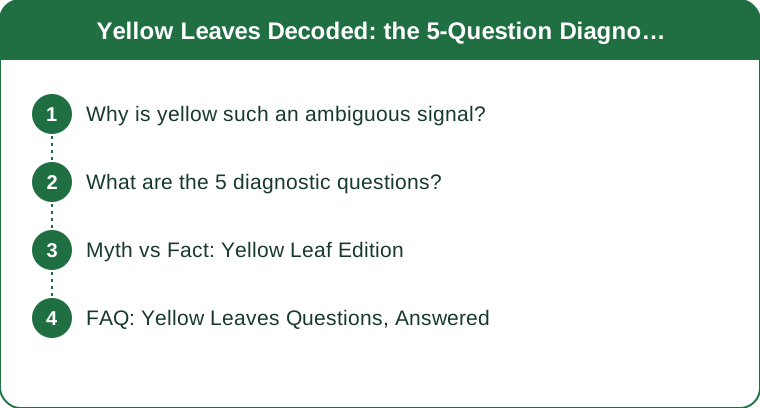
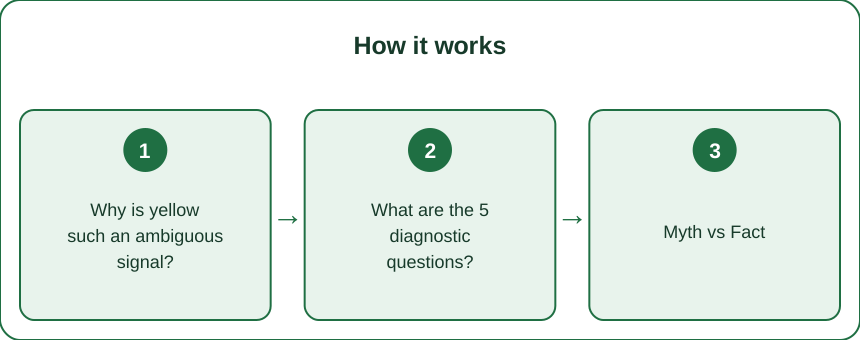
Why is yellow such an ambiguous signal?
Because yellowing (chlorosis) just means chlorophyll is breaking down — and chlorophyll breaks down for any major stress: drowning roots can’t deliver nutrients (overwatering), dry roots can’t either (underwatering), missing light means chlorophyll isn’t worth maintaining, nitrogen shortage forces the plant to salvage it from old leaves, and plain aging retires old leaves naturally.
Same yellow, opposite cures — water more vs. water less, feed vs. flush, move to light vs. shield from scorch. This is why ‘what do I do for yellow leaves?’ has no answer, but ‘what do I do for bottom-two-leaves-slowly-yellowing-on-a-thriving-plant?’ has an easy one (nothing — that’s retirement, not illness).
The diagnostic mindset shift: yellow tells you that something’s happening; the pattern — which leaves, how fast, and what the soil says — tells you what.
What are the 5 diagnostic questions?
1. Which leaves? Bottom/oldest only → aging (normal) or nitrogen shortage (if many). New/top growth yellowing → light or nutrient issues, sometimes water quality. Scattered everywhere → water problems, most often over.
2. How fast, and how many? One or two old leaves per month → normal turnover; stop worrying. Multiple leaves across weeks → active problem. Sudden widespread yellowing in days → acute (usually watering or temperature shock — check for cold drafts and heater blasts).
3. What does the soil actually say? The decisive question — finger two knuckles deep: soggy/smelly → overwatering (the statistical champion of houseplant death); bone-dry and pulling from the pot walls → underwatering; the pot’s weight tells the same story faster once you learn it. Never diagnose water by the leaf — diagnose by the soil.
4. What changed in the last month? Moved rooms, repotted, season shifted (light drops hard in fall/winter), heating on, fertilizer started or stopped. Plants yellow at changes; the timeline is often the whole answer.
5. What does the yellow look like? Uniform soft yellow + limp → water-related. Yellow between green veins → nutrient (classic magnesium/iron pattern, common in tap-sensitive or long-unfed plants). Crispy yellow-brown edges → underwatering or low humidity. Pale bleached-yellow patches on the sun side → scorch.

Myth vs Fact: Yellow Leaf Edition
Myth: Yellow leaf = thirsty plant. Fact: Overwatering causes more yellowing than underwatering — drowned roots rot and stop delivering, producing the exact ‘starving’ look that triggers more watering. The death spiral of houseplants is well-meaning hydration; the finger test breaks it.
Myth: A yellow leaf can recover if you fix the cause. Fact: Once fully yellow, a leaf doesn’t re-green (the chlorophyll’s dismantled) — but that’s fine: the goal is protecting the next leaves. Trim fully-yellow leaves or let the plant reabsorb; judge your fix by the new growth.
Myth: Fertilizer is the cure-all for yellowing. Fact: Feeding a plant whose roots are rotting or bone-dry adds stress (fertilizer needs functioning roots and moisture to be anything but salt burn). Fertilizer is the answer only when the pattern says nutrients — vein-pattern yellowing on a properly-watered, adequately-lit plant that hasn’t been fed in ages.
The meta-myth underneath: that yellow demands action. Sometimes — bottom leaf, old plant, everything else thriving — the correct response is a shrug and a trim. Plants retire leaves; it’s a lifecycle, not a cry for help.
FAQ: Yellow Leaves Questions, Answered
My plant yellows every winter — what gives?
Usually the light-water scissors: winter light drops (less photosynthesis) while your watering habit stays summer-sized — the plant needs less water and gets the same. Cut watering frequency in low season and let the soil actually dry; the winter yellows usually stop.
Should I repot a yellowing plant?
Only if the diagnosis points there: soggy-soil overwatering with suspected root rot (dark mushy roots, sour smell) → yes, into fresh dry-ish mix after trimming bad roots. Otherwise repotting adds shock to whatever’s already wrong — fix the cause first, repot on schedule later.
How do I tell scorch from other yellowing?
Location and shape: scorch shows as pale bleached or brown-crisped patches on the window-facing side, often with sharp edges, appearing after a move to brighter light or the spring sun angle shift. The cure is distance or a sheer curtain — not water, not food.
TL;DR:
- Yellow is one symptom with opposite causes — never treat before running the 5 questions (which leaves, how fast, soil check, what changed, what pattern)
- The finger test decides the water question; overwatering is the #1 killer and mimics thirst
- Bottom-old-slow = normal retirement; vein-pattern = nutrients; bleached window-side = scorch
- Yellow leaves don’t re-green — judge your fix by the new growth
The plant filed a report, not a request for water — read it before responding. This is general information, not medical advice.
Keep Reading
This article is for general informational and styling purposes only. Fit, sizing, and product availability may vary.