Houseplant Pests: Identifying and Beating the Five Usual Suspects
Every plant collection eventually hosts uninvited guests — the gnats in the soil, the webs on the leaves — and the difference between an incident and an infestation is early identification plus the right protocol. The pest guide: the five suspects, the treatments and the prevention system.

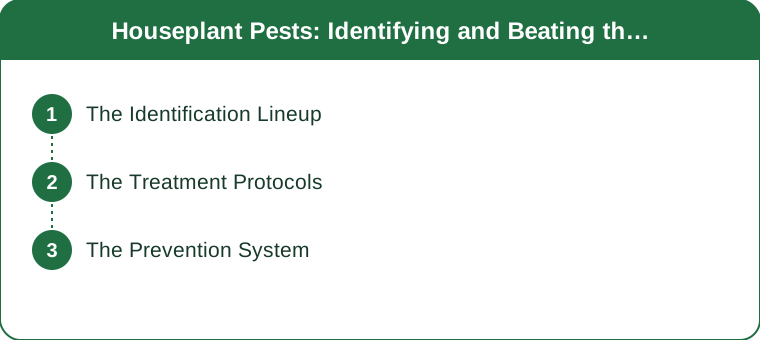
The Identification Lineup
Knowing your enemy: the fungus gnats (the tiny flies rising from the soil — the nuisance champion; the larvae in wet soil being the actual issue; the overwatering flag from the care doctrine), the spider mites (the fine webbing and stippled-pale leaves — the dry-air lover; the paper-test: the leaf tapped over white paper, the moving dots confirming; the collection’s most destructive regular), the mealybugs (the white cottony clusters in leaf joints — the slow-moving sap suckers; the sticky honeydew trail), the scale insects (the brown bumps that don’t scrape like dirt — the armored sap-suckers on stems and leaf undersides; the subtle-until-established pattern), the aphids (the green-or-black clusters on new growth — the soft-bodied fast breeders; the outdoor-plant hitchhikers), and the inspection ritual (the leaf UNDERSIDES and joints checked at watering — the phone-flashlight monthly audit from the care doctrine; the early catch being ninety percent of the win).

The Treatment Protocols
Bug by bug: the fungus-gnat protocol (the dry-out offensive — the top soil dried hard between waterings; the yellow sticky traps for adults, the bottom-watering conversion; the BTI granules-or-dunks in water for the persistent — the biological control that ends larvae), the spider-mite counterattack (the shower blast first — the physical removal underrated; the insecticidal-soap-or-neem rotation weekly for three weeks — the egg-cycle math requiring the repetition; the humidity raised as the environment fix), the mealybug treatment (the alcohol-swab spot treatment — the cotton bud dipped and dabbed; the soap-spray follow-up; the persistence honesty: the joints hiding survivors), the scale campaign (the manual scrape-and-swab — the armored adults resisting sprays; the horticultural-oil smothering rounds; the heavily-infested-stem pruning), the aphid response (the water blast and soap spray — the easiest win of the five; the new-growth recheck), and the universal rules (the treatments repeated on the egg cycle — the one-and-done myth; the plant isolated during treatment per the quarantine doctrine; the severely-infested cheap plant released without guilt — the triage honesty from the collection doctrine).
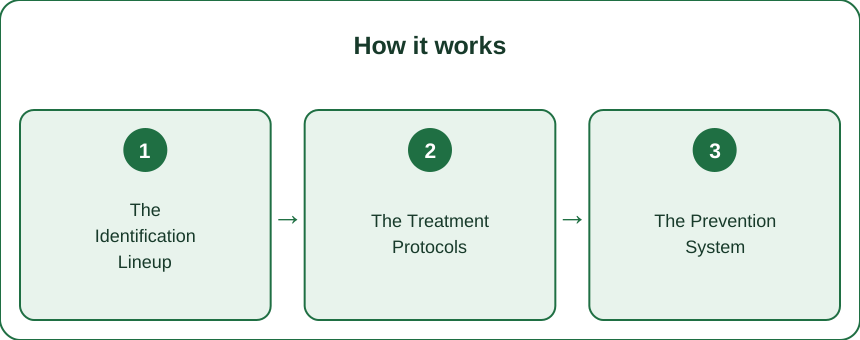
The Prevention System
Not hosting again: the quarantine law (the new plant isolated two-three weeks — the arrival inspection at the store: the leaf undersides checked BEFORE purchase; the single habit preventing most infestations per the prevention doctrine), the watering discipline (the overwatering that invites gnats and weakens plants — the finger-test doctrine; the healthy plant resisting what the stressed one hosts), the air-and-humidity balance (the dry-air mites and the damp-soil gnats being opposite complaints — the airflow that discourages both; the seasonal-heating dryness watched per the seasonal doctrine), the hygiene layer (the dead-leaf cleanup, the clean pruners between plants — the tool discipline from the care doctrine), the periodic audit (the monthly close-inspection rotation — the collection walked with the flashlight; the sticky-trap sentinels in the plant corner), the outdoor-summer protocol (the vacation-outside plants inspected hard on re-entry — the hitchhiker season from the seasonal doctrine), and the calm close (the pests being plant-parenthood’s ordinary weather, not failure — the caught-early incident staying an incident; the protocols known meaning the panic retired; the collection, defended by routine attention; the gnats, evicted with prejudice). Inspect undersides monthly, quarantine every newcomer, repeat treatments on the egg cycle: the suspects, beaten.
Know the five: soil gnats (dry it out plus BTI), spider mites (shower blast then weekly soap for three weeks), mealybugs (alcohol swabs), scale (scrape and oil), aphids (water blast). Quarantine newcomers two weeks and inspect leaf undersides monthly — early catch is ninety percent of the win.
Keep Reading
This article is for general informational and styling purposes only. Fit, sizing, and product availability may vary.