Plants for Dark Corners: The Low-Light Houseplants That Actually Thrive
Most ‘low light’ plant lists lie twice — first about what low light means, then about which plants merely survive it versus actually thrive — and the dark-corner gardener deserves the honest version. The low-light guide: the assessment, the true champions and the adjusted care.

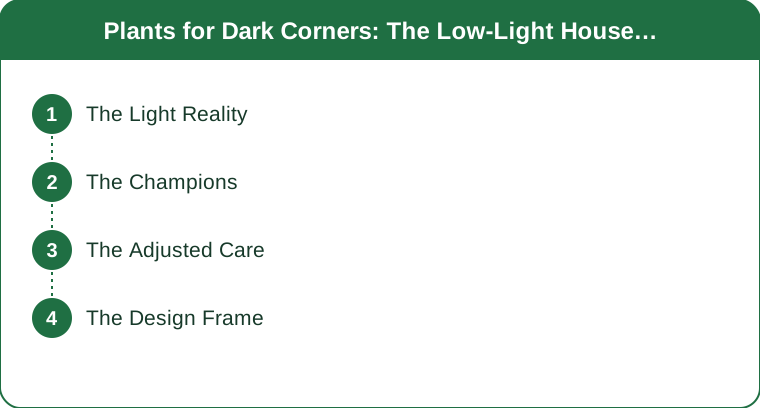
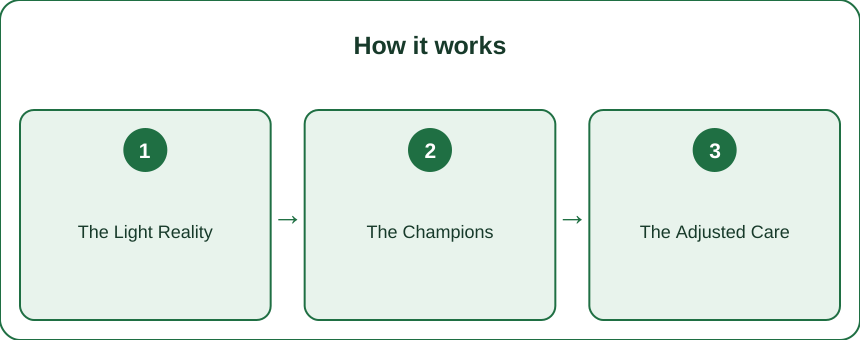
The Light Reality
What low light actually means: the definitions honesty (the ‘low light’ meaning bright enough to read comfortably — NOT the windowless bathroom; the no-light room needing either grow lights or rotating plants, full stop), the assessment methods (the shadow test — the sharp shadow meaning bright, the soft-fuzzy meaning medium, the barely-there meaning low; the phone light-meter apps for the precise; the north-window and far-from-window mapping), the seasonal shift (the summer-adequate corner going winter-dark — the seasonal plant migration per the seasonal doctrine), the survival-versus-thriving distinction (the plant SURVIVING low light by not growing — the slow decline read as stability; the thriving list below being genuinely metabolically comfortable), and the expectations calibration (the low-light plants growing SLOWLY by design — the patience framing; the no-flowers honesty for the dark corners).
The Champions
Ranked by real-world performance: the snake plant (the near-indestructible vertical — the weeks-between-waterings tolerance; the dark-corner tier’s undisputed champion per the beginner doctrine), the ZZ plant (the glossy survivor — the drought-and-dark double tolerance; the rhizome reserves that forgive neglect), the pothos family (the trailing workhorse — the low-light-tolerant with visible-growth rewards; the propagation-friendly from the propagation doctrine; the variegation fading in deep shade honesty), the philodendron heartleaf (the pothos’s softer cousin — the similar tolerance with classic charm), the cast-iron plant (the aptly-named Victorian survivor — the deepest-shade tolerance on the list), the peace lily (the low-light FLOWERING exception — the dramatic wilt-and-recover communication that teaches watering; the pet-toxicity note from the safety list), the ferns-and-calathea caution tier (the shade-lovers that need HUMIDITY — the low-light-but-fussy distinction; the bathroom placements that serve them), and the avoid list (the succulents-and-cacti in dark corners — the etiolated stretch and rot; the fiddle-leaf disappointment; the sun-lovers spared the slow death).

The Adjusted Care
Dark-corner protocols: the watering revolution (the low-light plant using water SLOWLY — the watering frequency halved versus bright rooms; the overwatering being the dark corner’s real killer per the care doctrine; the finger-test-always rule), the fertilizer restraint (the slow metabolism needing little — the quarter-strength seasonal feeding; the overfeeding burn risk), the dust discipline (the leaf-wiping that matters MORE in low light — the every-photon economics; the monthly wipe ritual), the rotation habit (the quarter-turn at watering — the even growth toward the weak light), the placement optimization (the mirror-and-white-wall tricks that bounce light — the few-feet-closer-to-window compromise; the plant shelf geometry from the shelf doctrine), the grow-light option (the screw-in grow bulbs in existing lamps — the timer-automated supplement; the aesthetic-acceptable modern options), and the health monitoring (the leggy-stretch and leaf-drop signals — the plant voting for relocation; the seasonal rotation to brighter recovery spots per the hospital-corner concept).
The Design Frame
Styling the shade: the corner composition (the tall snake plant, the mid-level ZZ and the trailing pothos as the classic dark-corner trio — the height-layering from the shelf doctrine), the planter-and-stand styling (the light-colored pots that brighten the corner — the plant stand that lifts toward the light), the room-by-room map (the bedroom’s low-light-and-air-plants pairing from the bedroom doctrine — the bathroom’s humidity-lovers; the hallway’s cast-iron territory), the realistic-collection close (the dark home growing a THRIVING modest collection versus a struggling ambitious one — the right-plant-right-place law from the beginner doctrine; the corner greened honestly), and the joy note (the low-light plants being the low-maintenance ones — the busy-person synergy; the dark corner, once written off, becoming the room’s calmest feature; the shade, planted with its actual friends). Snake, ZZ, pothos; half the water, all the patience: the dark corner, honestly thriving.
Low light means bright-enough-to-read, not windowless — snake plants, ZZ, pothos and cast-iron plants genuinely thrive there. Halve the watering (overwatering is the dark corner’s real killer), wipe leaves monthly, and give succulents to sunnier friends.
Keep Reading
This article is for general informational and styling purposes only. Fit, sizing, and product availability may vary.