Why Your Houseplant Looks Half-Dead in Winter Even Though It's Actually Fine
Quick Answer: Many houseplants enter a natural dormancy period in winter, driven by shorter daylight hours and cooler indoor temperatures, that slows growth and can dull leaf color — this is a normal seasonal response, not a sign of disease, and it’s commonly mistaken for decline by owners applying summer-level care and worrying when growth stalls.
If your plant hasn’t pushed a new leaf in two months and looks a little duller than it did in July, that’s often the plant doing exactly what it’s supposed to do this time of year.
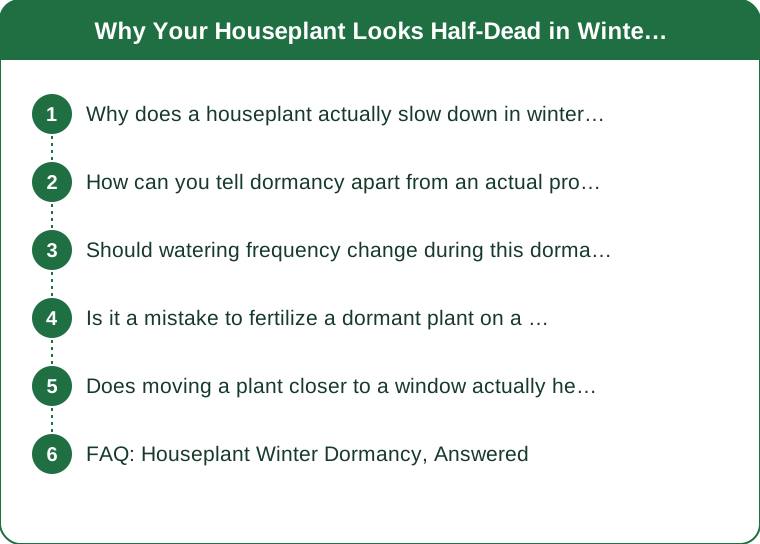
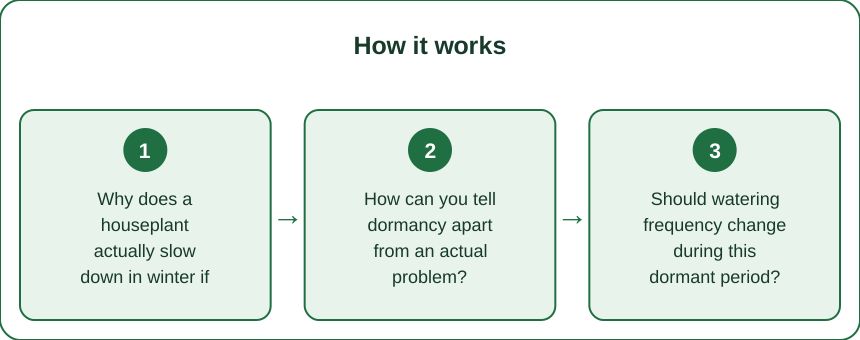
Why does a houseplant actually slow down in winter if it’s kept indoors year-round?
Even indoor plants respond to shortened daylight hours and lower ambient light intensity in winter, since natural light through a window still drops significantly compared to summer — lower light availability signals many plants to slow photosynthesis-driven growth, entering a lighter version of the dormancy response their wild relatives use to conserve energy through winter.
How can you tell dormancy apart from an actual problem?
Dormancy typically shows as slower growth and slightly duller color without new spotting, mushiness, or dropped leaves beyond the normal occasional old-leaf shed — an actual problem usually adds a specific additional symptom (yellowing spreading rapidly, soft brown stems, a sour smell from the soil) that dormancy alone doesn’t produce.
Should watering frequency change during this dormant period?
Yes, generally — most houseplants need noticeably less water during winter dormancy since slower growth means less water uptake, and continuing a summer watering schedule into winter is one of the most common causes of root rot, which can then get misdiagnosed as ‘the plant is just struggling with winter’ rather than overwatering.
Is it a mistake to fertilize a dormant plant on a normal schedule?
Generally, yes — fertilizing a plant that isn’t actively growing can lead to salt buildup in the soil since the plant isn’t using the nutrients, which can itself cause root damage that looks like unrelated winter decline. Pausing or significantly reducing fertilizer through the dormant months is standard guidance for most common houseplants.
Does moving a plant closer to a window actually help during this period?
Often, yes — since winter light levels are the main driver of slowed growth, moving a plant to the brightest available window (accounting for cold drafts right at the glass) can meaningfully offset some of the dormancy-driven slowdown, though it won’t eliminate the seasonal response entirely for most species.
FAQ: Houseplant Winter Dormancy, Answered
Do all houseplants go dormant in winter, or just some?
Most common houseplants show at least some slowdown, though the degree varies widely by species — some tropical plants slow only slightly, while others noticeably pause growth for months.
Is it normal for a plant to drop a few lower leaves during dormancy?
Occasional shedding of one or two older, lower leaves is common and not usually concerning on its own, as long as it’s not widespread or accompanied by other symptoms.
Should you repot a plant during its dormant period?
Most guidance recommends waiting until active growth resumes in spring to repot, since a dormant plant recovers from the root disturbance more slowly than an actively growing one.
TL;DR:
- Shorter daylight hours and lower indoor light trigger a normal winter slowdown in many houseplants
- Dormancy alone shouldn’t include spotting, mushiness, or a sour soil smell — those signal an actual problem
- Watering and fertilizing should both be reduced during dormancy to avoid root damage from excess
- Moving a plant to brighter winter light can soften, but won’t eliminate, the seasonal slowdown
A dull, slow-growing plant in January usually isn’t failing — it’s pacing itself, and easing up on water and fertilizer is the best way to help it through.
Keep Reading
This article is for general informational and styling purposes only. Fit, sizing, and product availability may vary.