Why the Finger Test for Watering Houseplants Isn't as Reliable as You've Been Told
Quick Answer: The finger test only measures the top inch or two of soil, but most houseplant roots sit deeper than that, so soil can feel dry on top while still being wet at root level — which is why finger-test watering often leads to overwatering.
It’s one of the most commonly repeated pieces of plant care advice, and it’s also one of the more misleading ones on its own.
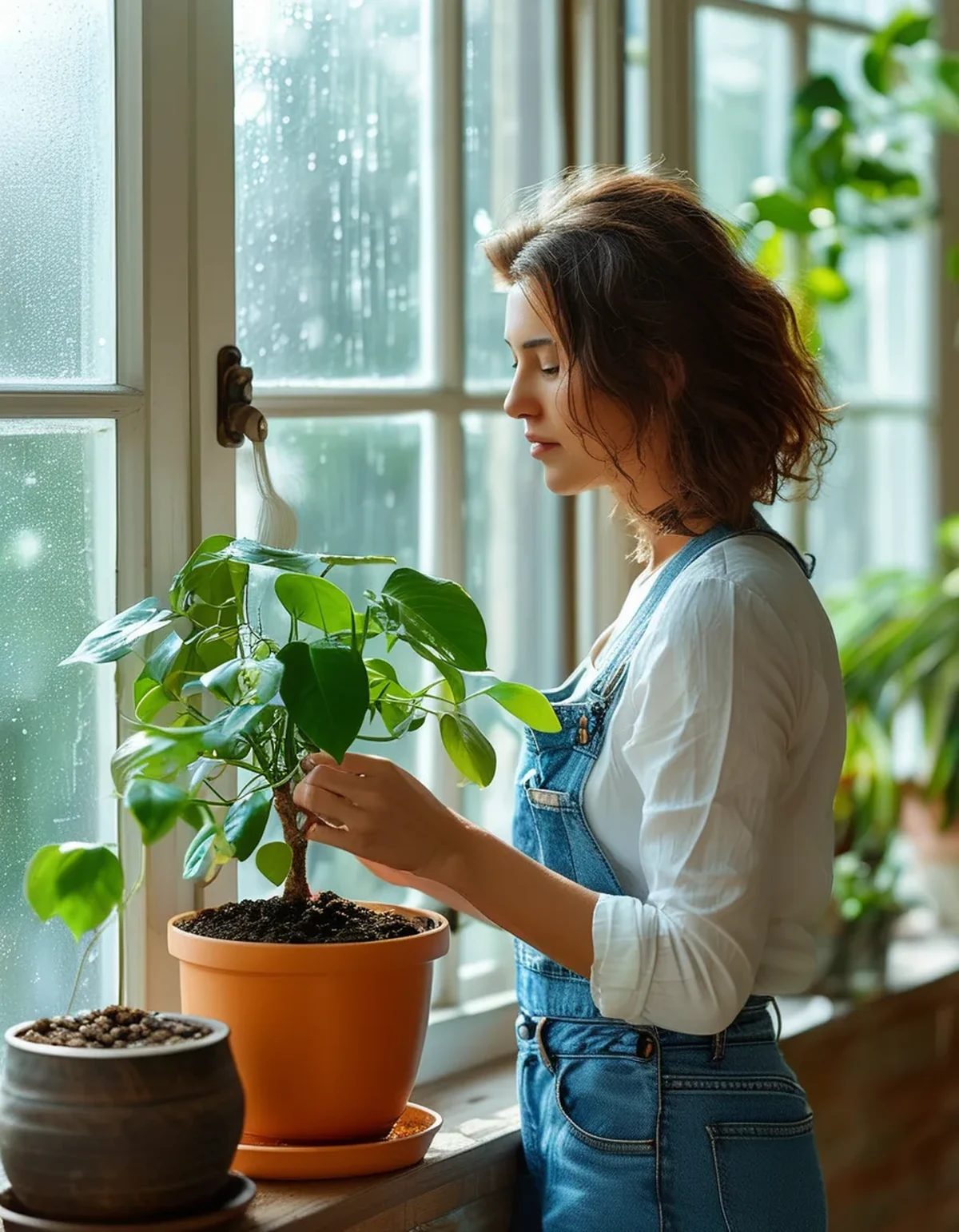
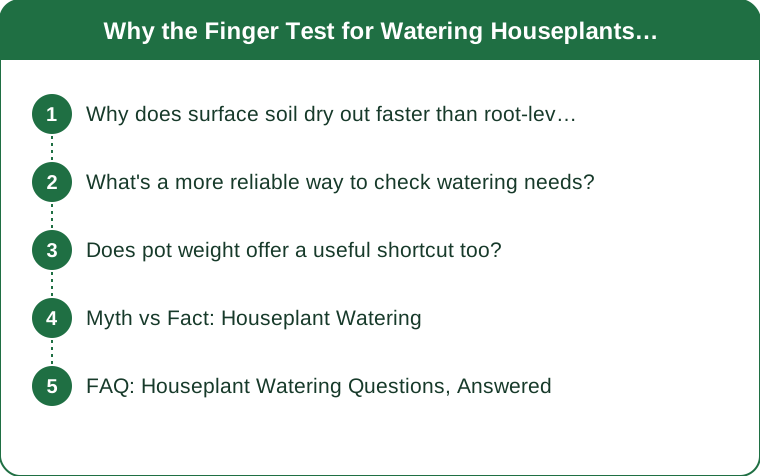
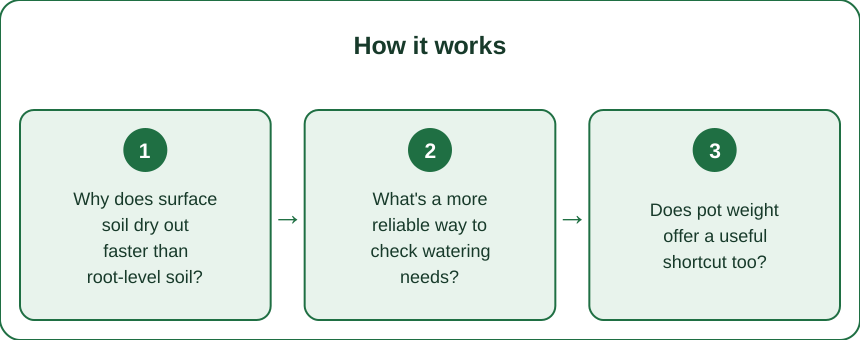
Why does surface soil dry out faster than root-level soil?
Soil near the surface is exposed to more air circulation and light, so it evaporates moisture faster than soil deeper in the pot where roots are actually absorbing water. A finger test only reaches an inch or two down, well above where most root systems sit, so it consistently reads drier than the actual moisture level at the roots.
What’s a more reliable way to check watering needs?
A wooden skewer or moisture meter inserted to the bottom third of the pot gives a much more accurate picture, since it reads moisture at the depth where roots are actually working. If a skewer comes out with damp soil clinging to it, or a moisture meter reads mid-range or higher, the plant likely doesn’t need water yet even if the surface feels dry.
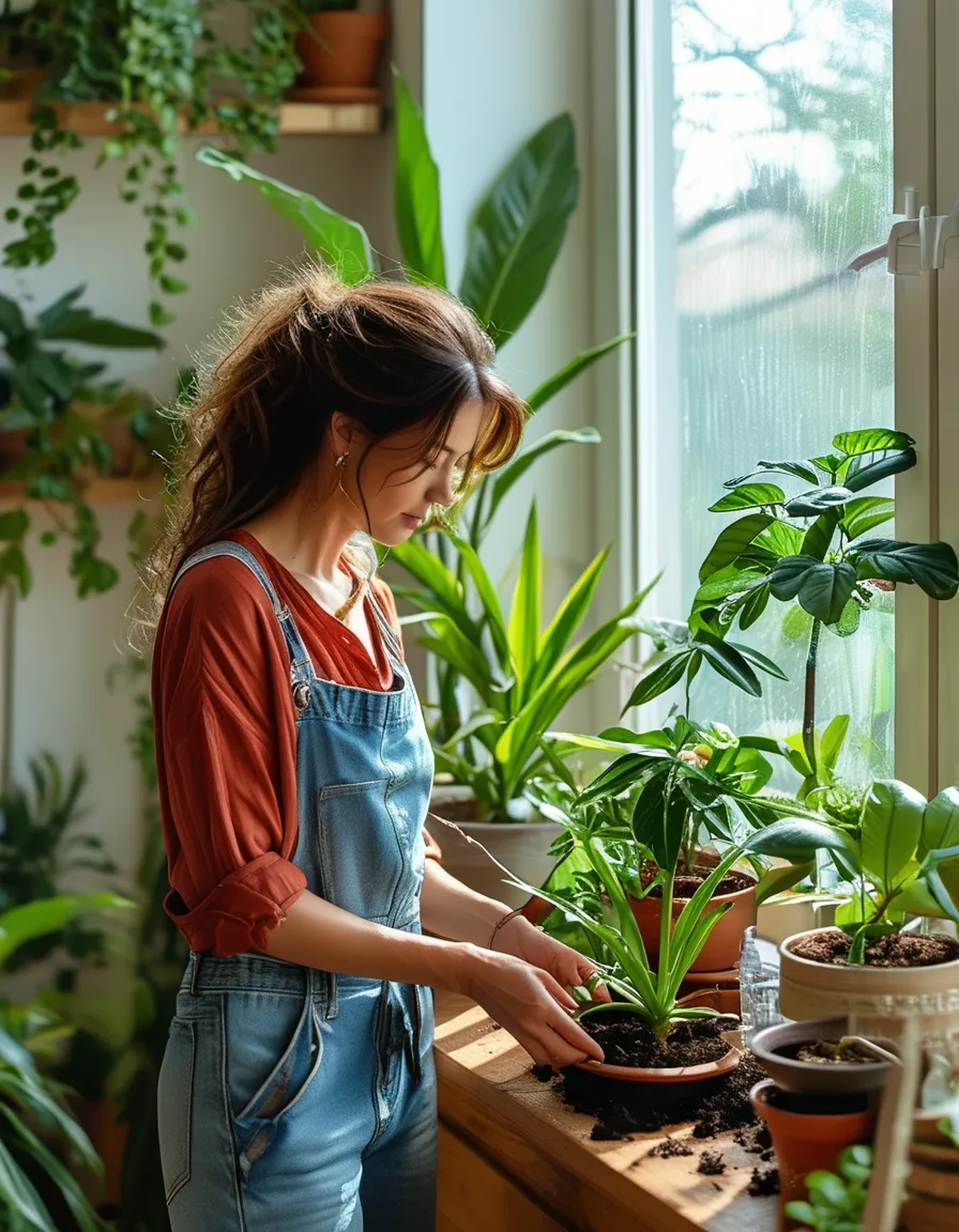
Does pot weight offer a useful shortcut too?
Yes — lifting the pot and getting familiar with how it feels when recently watered versus when it’s actually dry is a surprisingly reliable method once you’ve calibrated to a specific plant and pot. A pot that feels notably lighter than its just-watered weight is a good sign it’s genuinely ready for water.
Myth vs Fact: Houseplant Watering
Myth: If the top of the soil feels dry, it’s time to water. Fact: Top-inch dryness doesn’t reflect root-level moisture, which is what actually matters for the plant.
Myth: Overwatering is less common than underwatering. Fact: Overwatering is actually the more frequent cause of houseplant death, partly because of misleading surface-only moisture checks.
Myth: All houseplants need the same watering check method. Fact: Succulents, tropical foliage, and orchids all have different root depths and moisture needs — one method doesn’t fit all types well.
FAQ: Houseplant Watering Questions, Answered
How deep should a moisture meter actually go?
Inserting it to roughly two-thirds of the pot’s depth gives the most representative reading of root-zone moisture for most houseplants.
Is it possible to underwater by relying on skewer checks?
It’s less common, but checking too infrequently combined with a skewer test can lead to underwatering in fast-draining soil — pairing the check with a consistent schedule review helps.
How often should I actually check moisture level?
Checking every 5-7 days for most common houseplants, rather than watering on a fixed calendar schedule, adapts better to seasonal changes in light and humidity.
TL;DR:
- The finger test only reads the top inch or two, missing root-level moisture entirely
- A skewer or moisture meter inserted deeper gives a far more accurate picture
- Pot weight, once calibrated, is a surprisingly reliable shortcut
- Overwatering, not underwatering, is the more common houseplant killer
Next time you’re about to water based on a dry-feeling surface, grab a skewer first — you might be surprised how often the soil underneath is still plenty moist.
Keep Reading
This article is for general informational and styling purposes only. Fit, sizing, and product availability may vary.