Why a Houseplant Stops Growing Even When Nothing Looks Obviously Wrong
Quick Answer: A plant that looks fine but isn’t growing is usually dealing with root-bound conditions, insufficient light for active growth (not just survival), or being outside its natural growing season — all three are easy to miss because none produce dramatic visible symptoms.
A plant that’s declining is easy to notice. A plant that’s simply stalled, with no other red flags, is a quieter and more commonly missed problem.
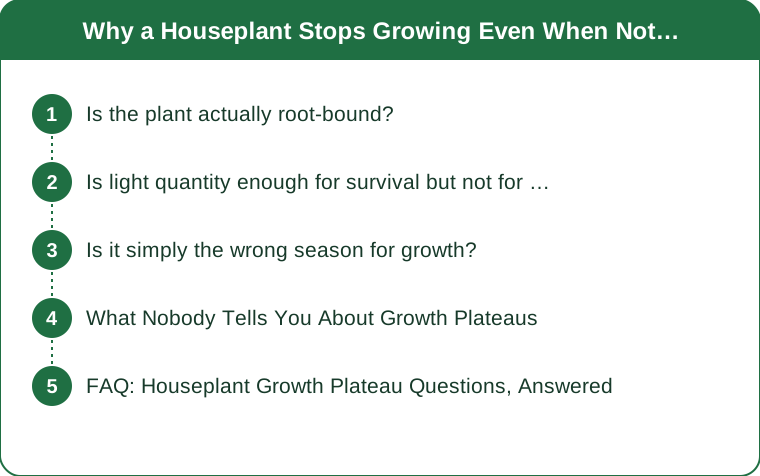
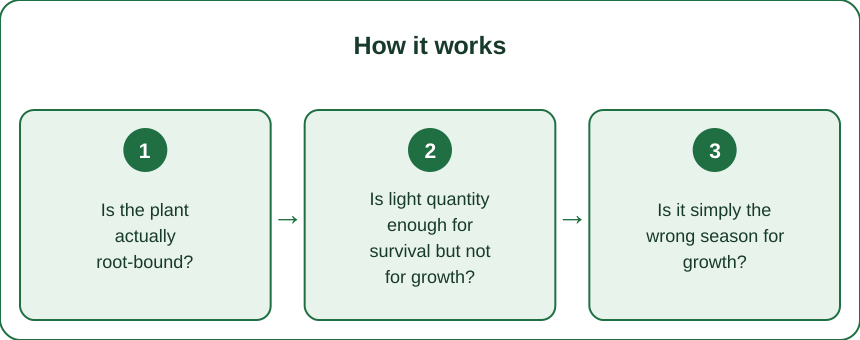
Is the plant actually root-bound?
A plant whose roots have filled the pot and started circling has limited room to take up new water and nutrients, which caps growth even though the foliage itself may look perfectly healthy for a long time before other symptoms appear. Check by gently sliding the plant out of its pot — dense, circling roots with little visible soil is the tell.
Fix: repot into a container roughly 1-2 inches larger in diameter, using fresh soil, ideally during the plant’s active growing season for the least stress.
Is light quantity enough for survival but not for growth?
Many houseplants can survive indefinitely in lower light without dying, but active new growth requires meaningfully more light than bare survival does — this is a commonly missed distinction, since “the plant isn’t dying” gets mistaken for “the light is adequate.”
A plant that’s stalled but otherwise healthy is worth moving a few feet closer to a bright window, or supplementing with a grow light, before assuming a different cause.
Is it simply the wrong season for growth?
Most houseplants have a defined active growing season (typically spring through early fall for many common varieties) and a dormant or semi-dormant period in fall and winter where growth naturally slows or stops entirely, regardless of care quality. Expecting steady growth through winter, then troubleshooting a “problem” that’s actually normal seasonal dormancy, is a common and unnecessary source of plant-parent stress.
Checking your specific plant’s typical growing season before assuming something’s wrong saves a lot of misplaced fertilizing or repotting during a period when the plant isn’t going to respond to it anyway.
What Nobody Tells You About Growth Plateaus
Fertilizer timing matters as much as fertilizer use — feeding a plant during its dormant period does little to restart growth and can occasionally cause root stress from unused nutrient buildup in the soil. Save fertilizing for the confirmed active growing season, when the plant can actually use it.
Also underrated: a plant recently repotted or moved to a new location often pauses growth for several weeks simply adjusting — this transition plateau is normal and temporary, not a sign anything is wrong with the new setup.
FAQ: Houseplant Growth Plateau Questions, Answered
How long should I wait before troubleshooting a stalled plant?
If it’s within the plant’s normal dormant season, waiting it out is reasonable; during active growing season, a stall lasting more than 4-6 weeks is worth checking root-bound status and light levels.
Does a bigger pot always mean faster future growth?
Up to a reasonable point — an oversized pot relative to the plant’s current root system can actually hold excess moisture and increase root rot risk, so size up moderately, not dramatically.
Can stress from a recent move cause a long-term growth stall?
Usually the adjustment period resolves within a few weeks to a couple months; a stall persisting much longer than that likely has an additional cause worth investigating separately.
TL;DR:
- Root-bound conditions cap nutrient uptake well before other visible symptoms appear
- Enough light to survive isn’t always enough light to actively grow
- Most houseplants have a defined dormant season where slowed growth is completely normal
- Recently repotted or relocated plants often pause growth for a few weeks while adjusting
Keep Reading
This article is for general informational and styling purposes only. Fit, sizing, and product availability may vary.