Repotting Houseplants: When to Do It, How to Do It, and How Not to Kill Your Plant
Quick Answer: Repot when roots grow out the drainage holes, water runs straight through, or growth stalls — typically every 12–18 months for most houseplants. Go up only 1–2 inches in pot diameter, use fresh potting mix, gently loosen the root ball, plant at the same depth as before, and water thoroughly. Do it in spring or early summer, and skip fertilizer for 4–6 weeks afterward.
Two ways people kill plants at repotting time. The first is never doing it — the plant slowly strangles in a pot it outgrew three years ago. The second is doing it wrong, usually by moving a small plant into a giant pot because it seemed generous.
Both are fixable with about fifteen minutes of knowing what you’re doing.
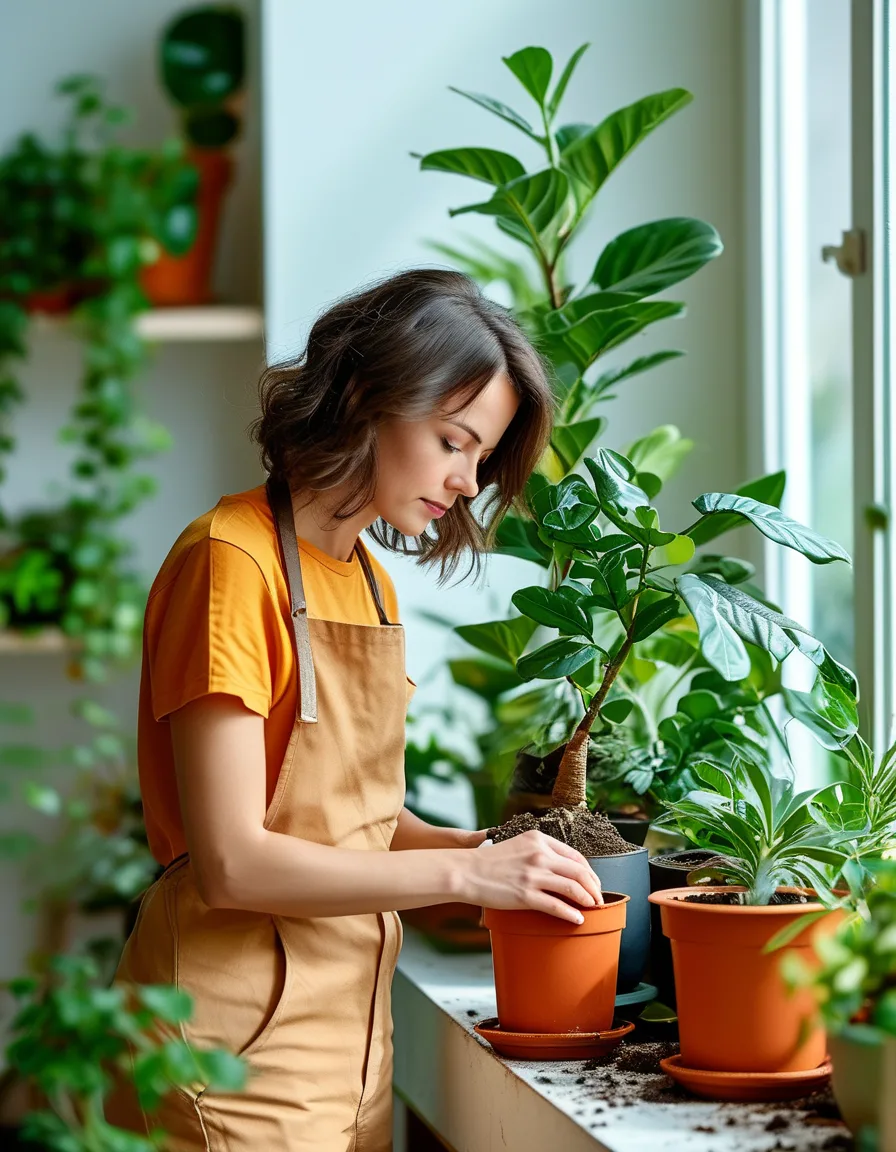
How Do You Know When a Plant Needs Repotting?
Six signs, in rough order of reliability:
- Roots coming out the drainage holes. The clearest signal there is.
- Roots circling the surface of the soil, or visibly pushing the plant upward.
- Water runs straight through in seconds. The pot is more root than soil, so there’s nothing left to hold moisture.
- The plant dries out constantly — needing water every 2–3 days when it used to go a week.
- Growth has stalled during the growing season despite adequate light and water.
- The plant is top-heavy and tips over.
You can also just check: slide the plant out of its pot and look. If you see a dense white spiral of roots with barely any soil visible, it’s rootbound and it’s time.
Most houseplants need repotting every 12–18 months. Fast growers like pothos and monstera may want it annually; slow growers like snake plants and ZZ plants can happily go 2–3 years. Some plants — peace lilies, spider plants, many succulents — actually flower or perform better slightly snug.
When Is the Best Time to Repot?
Spring through early summer, during active growth. The plant has the energy reserves to recover and push new roots into the fresh soil.
Repotting in late fall or winter, when most houseplants are semi-dormant, means the plant sits in damp soil it isn’t drinking from — which is one of the more common routes to root rot.
The exception: if the plant is in genuine distress — root rot, a broken pot, severe pest infestation — repot immediately, regardless of season. An emergency outranks the calendar.
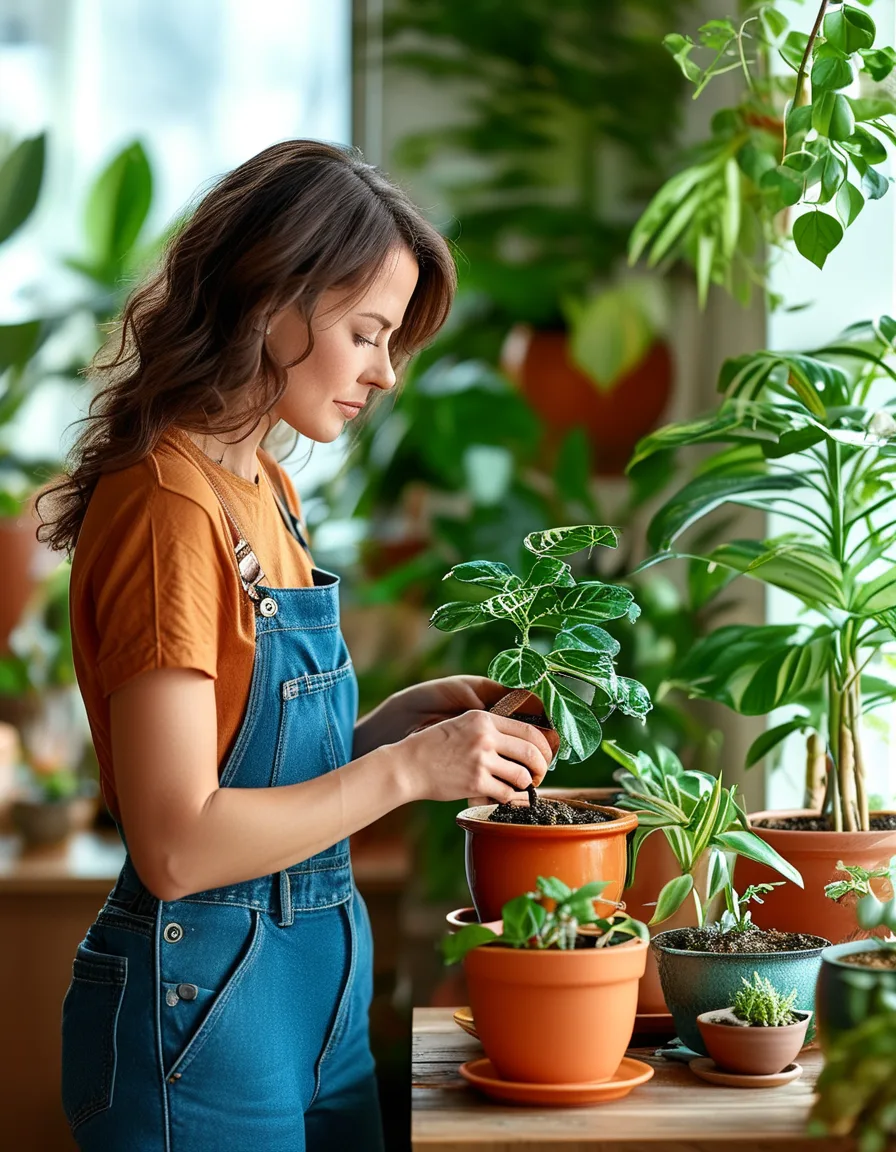
How to Repot a Houseplant, Step by Step
You’ll need: a new pot 1–2 inches wider in diameter with drainage holes, fresh potting mix, and something to catch the mess.
-
Water the day before. A slightly moist root ball slides out cleanly and the roots handle disturbance better. A bone-dry one crumbles and tears.
-
Choose the pot carefully. Only 1–2 inches larger in diameter — this is the rule people break most. A pot that’s too big holds far more water than the roots can drink, and that permanently damp soil is the single most common cause of root rot after repotting. Bigger is not kinder.
-
Remove the plant gently. Tip the pot sideways, support the base of the stem, and squeeze or tap the sides. Never pull by the stem. If it’s genuinely stuck, run a butter knife around the inside edge.
-
Inspect and loosen the roots. Tease apart circling roots with your fingers. If they’re tightly bound into a solid mat, make 3–4 shallow vertical cuts down the sides with a clean knife — this feels violent and it’s exactly right; it stops the roots continuing to circle. Trim away anything black, mushy, or foul-smelling. Healthy roots are firm and white or light tan.
-
Add fresh mix to the bottom. Enough that the plant will sit at the same depth it was before. Getting this wrong in either direction causes problems: too deep rots the stem, too shallow exposes roots.
-
Position and backfill. Center the plant, add mix around the sides, and firm it gently with your fingers. Don’t compact it hard — roots need air pockets. Leave about an inch of space below the rim for watering.
-
Water thoroughly until it runs from the drainage holes. This settles the soil around the roots and eliminates air gaps. Top up with a little more mix if the level drops.
What Soil Should You Use?
Fresh mix, not reused soil from another pot — old potting mix is depleted and compacted, and may carry pests or pathogens.
Match the mix to the plant:
- Most tropical foliage (pothos, monstera, philodendron, ficus): standard indoor potting mix, ideally with perlite added for drainage
- Succulents and cacti: cactus mix, or standard mix cut 50/50 with perlite or coarse sand
- Orchids: bark-based orchid mix — never standard potting soil
- Aroids (monstera, anthurium): chunky mix with bark and perlite; they want air around the roots
- African violets, ferns: a finer, more moisture-retentive mix
And a persistent myth worth killing: do not put gravel or pebbles in the bottom for “drainage.” It doesn’t improve drainage — it raises the perched water table, meaning the saturated zone sits closer to the roots. It’s the opposite of helpful. A pot with a drainage hole and appropriate mix needs nothing else.
5 Mistakes That Kill Plants After Repotting
- Pot too big. Two inches, maximum. A small plant in a huge pot is sitting in permanently wet soil.
- Fertilizing right away. Fresh potting mix already contains nutrients, and damaged roots can’t process fertilizer well. Wait 4–6 weeks. Feeding a stressed plant burns the roots.
- Overwatering during recovery. After the initial thorough watering, let the top inch or two dry out before watering again. Disturbed roots absorb less than intact ones, so the soil stays wet longer than you expect.
- Moving it to brighter light. Keep it exactly where it was, or slightly dimmer, for two weeks. New light plus root disturbance is two stresses at once.
- Panicking at the droop. Some wilting and a dropped leaf or two in the first week is completely normal transplant shock. The instinct is to water more, which is the one thing that turns a recoverable plant into a dead one. Wait. Most plants perk up within 7–14 days.
Mini FAQ
How much bigger should the new pot be?
One to two inches larger in diameter — no more. For a 4-inch pot, move to 6 inches. For a 10-inch pot, move to 12. Oversized pots hold excess water the roots can’t use, which leads to rot.
Should you water immediately after repotting?
Yes, thoroughly, until water runs out the drainage holes. This settles soil around the roots and removes air pockets. Then hold off until the top 1–2 inches feel dry, which may take longer than usual while the roots recover.
Why is my plant drooping after repotting?
Almost always transplant shock — normal, and usually resolves in 1–2 weeks. Keep it in the same light, don’t fertilize, and resist the urge to water more. If drooping continues past three weeks or leaves yellow from the base up, check the roots for rot.
TL;DR
- Repot when roots exit the drainage holes, water runs straight through, or growth stalls — usually every 12–18 months.
- Timing: spring to early summer, during active growth.
- Pot size: only 1–2 inches wider. This is the rule that matters most.
- Loosen circling roots, trim anything black or mushy, plant at the same depth.
- Water thoroughly once, then let it dry down between waterings.
- No fertilizer for 4–6 weeks. No new light spot for 2 weeks. Expect a little droop.
Right timing, right pot size, then leave it alone. That’s the whole job.
Keep Reading
This article is for general informational and styling purposes only. Fit, sizing, and product availability may vary.