Does Your Houseplant Actually Need More Humidity?
Quick Answer: Crispy brown leaf edges combined with a plant species known to need tropical humidity (like calatheas or ferns) points to genuine low humidity — but the same symptom in a species that tolerates dry air, like a snake plant or pothos, usually means something else, most often inconsistent watering.
You’ve read that misting fixes crispy leaves and started spraying everything daily. For some plants, that’s genuinely helpful. For others, it’s doing almost nothing, or actively inviting fungal problems.
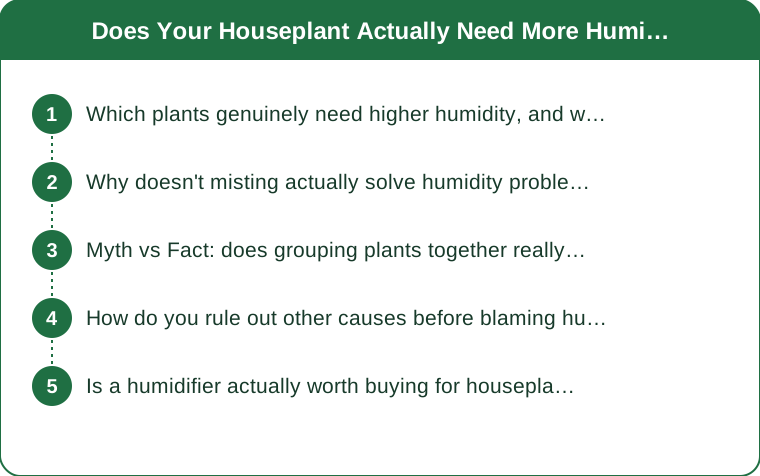
Which plants genuinely need higher humidity, and which don’t?
Tropical understory plants — calathea, maranta, ferns, some orchids — evolved in consistently humid rainforest conditions and show real stress (crispy edges, curling leaves) when household humidity drops much below 40-50%. Succulents, snake plants, and pothos evolved in drier or more variable conditions and tolerate typical indoor humidity (often 30-40%) without issue.
Matching the diagnosis to the specific plant species is the first step — the same symptom means something different depending on what’s actually growing in the pot.
Why doesn’t misting actually solve humidity problems well?
Misting raises humidity around a plant for maybe 15-20 minutes before it disperses into the room — it’s a brief spike, not a sustained change, and most humidity-loving plants need consistently elevated humidity, not intermittent bursts. Worse, wet leaves that don’t dry quickly can encourage fungal spotting on sensitive species.
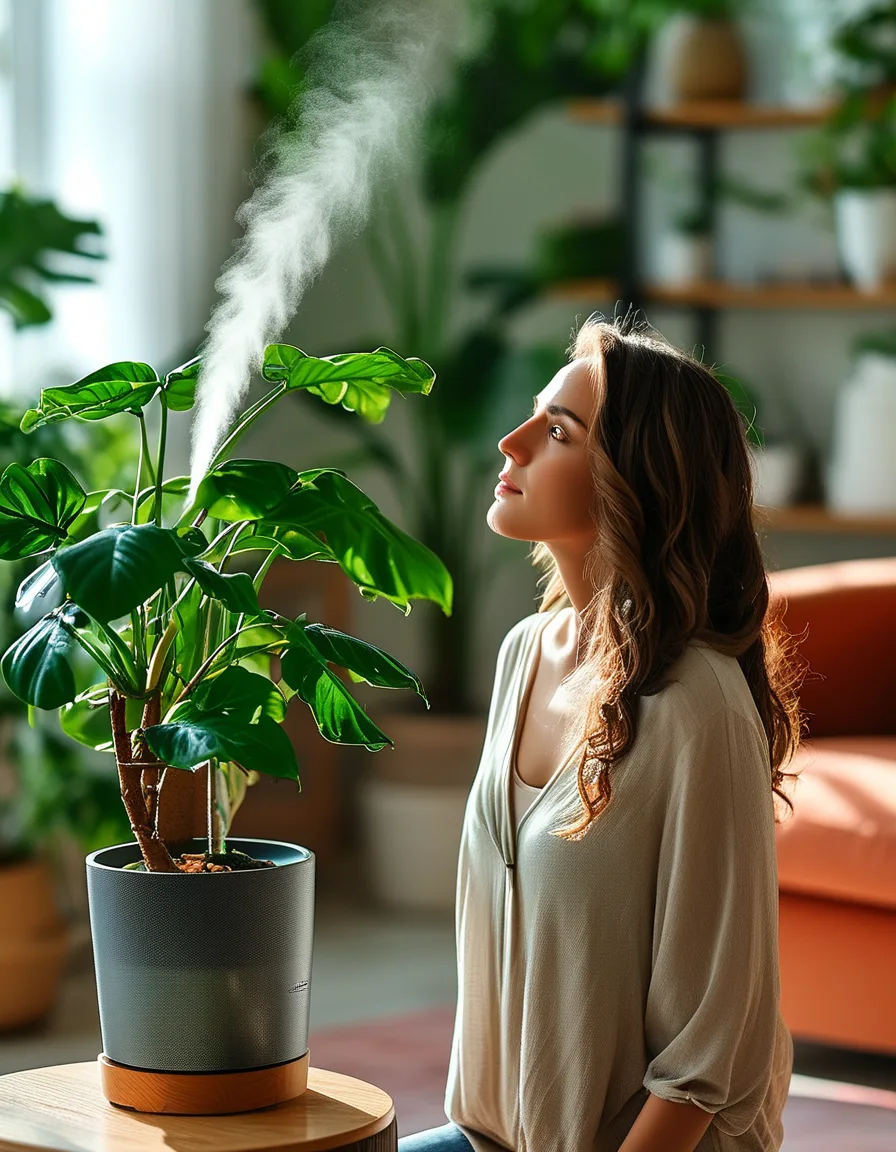
A humidifier, pebble tray with water beneath (not touching) the pot, or grouping humidity-loving plants together to create a shared microclimate all provide more sustained humidity than misting ever does.
Myth vs Fact: does grouping plants together really help?
Myth: grouping plants is just a nice aesthetic choice. Fact: plants release moisture through transpiration, and clustering humidity-loving species together genuinely raises the local humidity in that immediate area, functioning as a low-effort microclimate.
Myth: any brown leaf tip means low humidity. Fact: brown tips are also a classic sign of fluoride or chlorine sensitivity from tap water, inconsistent watering, or excess fertilizer salt buildup — humidity is one of several possible causes, not the default explanation.
How do you rule out other causes before blaming humidity?
Check watering consistency first — irregular watering (letting soil fully dry out, then overcorrecting) causes similar leaf stress symptoms to low humidity and is actually more common as the root cause. Check for mineral buildup on soil surface, which suggests tap water sensitivity rather than air dryness.
If the plant species is one known to tolerate normal home humidity and you’re still seeing symptoms, humidity is probably not the actual issue, even if the symptom looks similar to what a humidity chart describes.
Is a humidifier actually worth buying for houseplants?
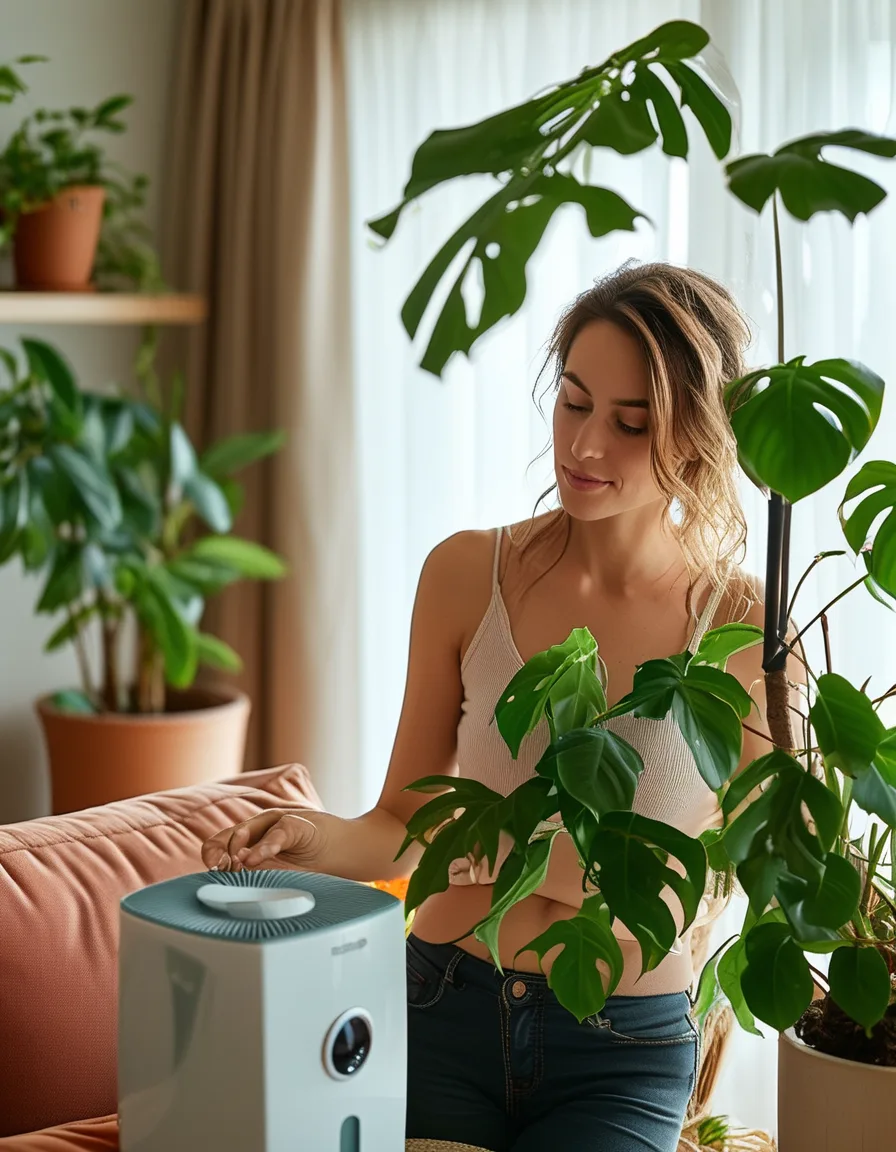
If you have multiple genuinely humidity-sensitive species (several calatheas, ferns, or orchids), a small humidifier is often the most effective single intervention, maintaining more consistent humidity than pebble trays or grouping alone. For one or two humidity-loving plants, a pebble tray is usually sufficient and avoids the maintenance of running a humidifier.
This is general plant care guidance — checking your specific plant species’ actual native habitat conditions gives a more accurate answer than a blanket humidity rule.
TL;DR:
- Match the diagnosis to the species — some plants genuinely need high humidity, others tolerate dry air fine
- Misting provides only a brief humidity spike, not a sustained fix
- Rule out watering inconsistency and mineral buildup before assuming it’s a humidity issue
- A humidifier is worth it for multiple humidity-sensitive plants; a pebble tray covers one or two
Humidity is a real factor for the right plants, but it’s become a default diagnosis applied too broadly — check the species and rule out watering first.
Keep Reading
This article is for general informational and styling purposes only. Fit, sizing, and product availability may vary.