How Often Should You Actually Fertilize Houseplants? The Season-Based Answer
Quick Answer: Fertilize actively growing houseplants every 2-4 weeks during spring and summer, cut back to monthly or stop entirely in fall and winter when growth slows. Following a fixed year-round schedule is the most common cause of fertilizer burn.
You set a monthly reminder to fertilize and follow it religiously all year — and then wonder why your plants look worse in January than they did in July. The schedule that made sense in summer is quietly hurting them in winter.

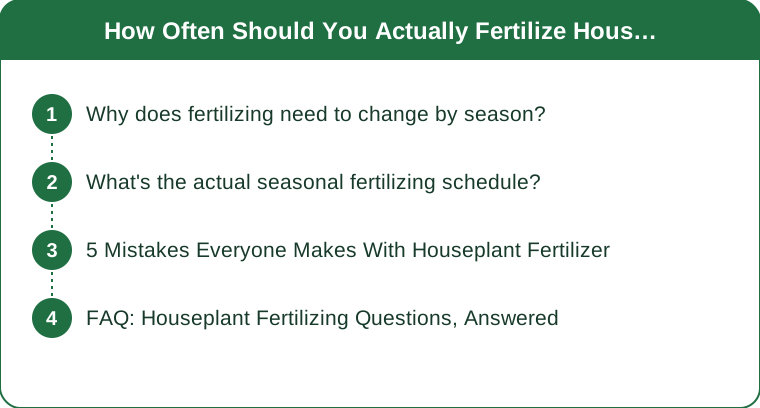
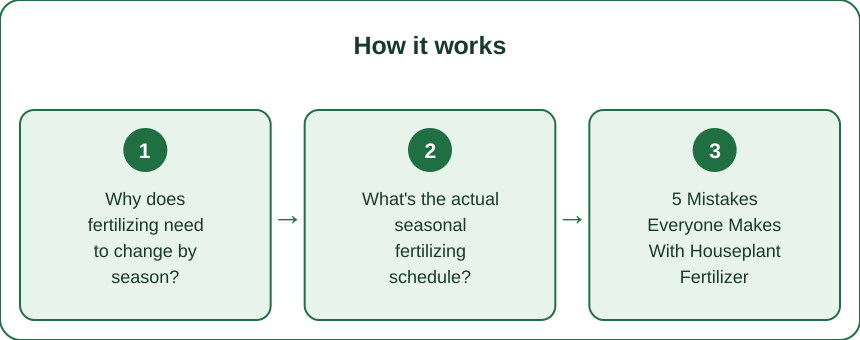
Why does fertilizing need to change by season?
Houseplants slow or nearly stop active growth in fall and winter as daylight hours drop, even indoors under artificial light, largely following the same light-driven dormancy cues as outdoor plants. A dormant or slow-growing plant can’t use the nutrients you’re feeding it.
Unused fertilizer salts build up in the soil instead, which is the actual mechanism behind fertilizer burn — crispy brown leaf edges that show up weeks after a well-intentioned winter feeding.
What’s the actual seasonal fertilizing schedule?
Spring/summer (active growth): Every 2-4 weeks with a balanced, diluted liquid fertilizer — this is when the plant can actually use the extra nutrients for new leaves and roots.
Fall: Taper to once a month, watching for slowing new growth as your cue to pull back further.
Winter (dormant/slow period): Stop entirely for most houseplants, or feed at most once during the whole season at quarter-strength if the plant is still actively pushing new leaves under grow lights.

5 Mistakes Everyone Makes With Houseplant Fertilizer
1. Fertilizing a stressed or newly repotted plant. Wait 4-6 weeks after repotting — fresh soil already has nutrients, and stressed roots can’t process more.
2. Full-strength dosing ‘to be safe.’ Diluting to half the label-recommended strength is safer and still effective for most houseplants.
3. Fertilizing dry soil. Always water first, then fertilize — feeding dry roots concentrates salts right at the root zone and increases burn risk.
4. Ignoring visible salt buildup. White crust on soil surface or pot rim means it’s time to flush the soil with plain water, not add more fertilizer.
5. Same schedule for every plant. Succulents and slow growers need far less frequent feeding than fast-growing tropicals like pothos.
FAQ: Houseplant Fertilizing Questions, Answered
What happens if I forget to fertilize during growing season?
Nothing dramatic short-term — most houseplants can go a season without fertilizer and simply grow a bit slower. It’s a growth booster, not a survival requirement.
Can I use the same fertilizer for all my houseplants?
A balanced, general houseplant fertilizer works for most common varieties; succulents and cacti do better with a lower-nitrogen formula specifically made for them.
How do I know if I’ve already over-fertilized?
Crispy brown leaf tips or edges, especially on newer growth, are the classic sign. Flush the soil thoroughly with plain water and hold off feeding for a full month.
TL;DR:
- Fertilize every 2-4 weeks in spring/summer when plants are actively growing
- Taper in fall, stop or nearly stop in winter dormancy
- A fixed year-round schedule is the most common cause of fertilizer burn
- Always water before fertilizing, and dilute to half-strength for safety
Check your calendar reminder — if it’s set to ‘every month, all year,’ that’s worth adjusting before your next winter feeding.
Keep Reading
This article is for general informational and styling purposes only. Fit, sizing, and product availability may vary.